

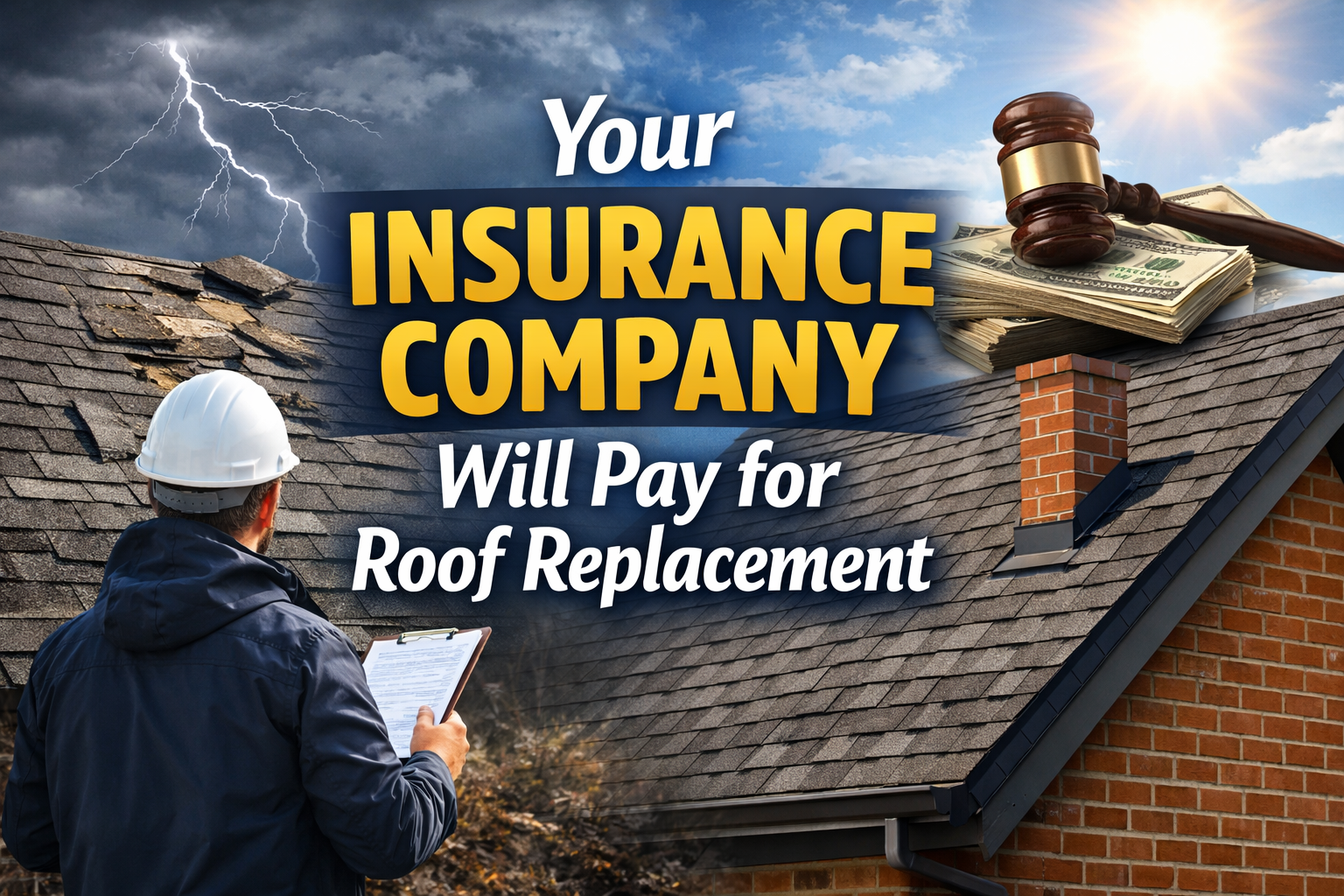
Homeowners insurance may pay for roof repair or replacement when the damage results from a covered loss, but coverage depends on the individual policy, the cause of damage, the condition of the roof, the deductible and the way the policy values the loss. A roofing contractor can inspect and document roof damage, but the insurance company determines whether a claim is covered and how much it will pay.
This guide explains the basic roof insurance claim process for Utah homeowners and the different roles of the homeowner, roofing contractor and insurance company.
Does Homeowners Insurance Cover Roof Damage in Utah?
It can. The Utah Insurance Department explains that many standard homeowners policies cover certain sudden losses such as wind damage, wind-driven rain, falling objects and some damage associated with ice or snow. However, every policy has its own terms, exclusions, deductibles and limits, so homeowners should review their policy and discuss the specific loss with their insurer.
For current Utah guidance, see the Utah Insurance Department’s Home Claims Information.
What a Roofing Contractor Can Do During an Insurance Claim
A roofing contractor can help document the physical condition of the roof and prepare a repair or replacement estimate. Depending on the situation, that may include:
- Inspecting visible roof damage
- Photographing damaged shingles, flashing, membranes or other roof components
- Identifying areas where temporary protection may be needed
- Preparing a written scope and estimate for roofing repairs
- Explaining what roofing materials and work would be required
- Identifying hidden damage discovered after work begins and documenting it for the homeowner
A contractor should not promise that an insurance company will approve a claim, determine policy coverage, or guarantee that a homeowner will receive a full roof replacement. Those decisions belong to the insurer under the terms of the policy.
What Utah Homeowners Should Do After Storm or Roof Damage
The Utah Insurance Department recommends documenting damage, protecting the property from additional damage and contacting the insurance company or agent promptly. Homeowners should also ask what forms, documents and information the insurer requires.
A practical sequence is:
- Document the damage. Take photos or video before cleanup or permanent repairs when it is safe to do so.
- Prevent additional damage. Temporary measures such as covering an exposed roof may be appropriate. Keep receipts for temporary repairs.
- Contact your insurer. Report the loss and ask what documentation and inspection process the company requires.
- Have the roof evaluated. A qualified roofing contractor can inspect the roof and prepare a repair or replacement estimate.
- Allow the insurance adjuster to inspect the property. The insurer evaluates the claim and determines coverage under the policy.
- Review the settlement and repair scope. Compare the insurer’s scope with the contractor’s estimate and ask questions if material differences exist.
The Utah Insurance Department advises homeowners not to make permanent repairs before the insurance company has had an opportunity to inspect the property and the repair scope has been addressed. Temporary repairs to prevent further damage are different and should be documented.
Actual Cash Value vs. Replacement Cost Coverage
One of the most important policy distinctions is whether a covered loss is paid on an actual cash value (ACV) or replacement cost value (RCV) basis.
Actual Cash Value (ACV)
ACV generally considers depreciation based on factors such as age and wear. This means a covered claim may pay less than the full cost of replacing the damaged roofing materials.
Replacement Cost Value (RCV)
RCV coverage generally pays the cost to repair or replace covered damaged property with materials of like kind and quality, subject to the policy terms and deductible. Some policies may release portions of replacement-cost benefits at different stages of the repair process.
The National Association of Insurance Commissioners provides a useful explanation of ACV and replacement cost coverage.
Does an Older Roof Automatically Mean a Claim Will Be Denied?
No single rule applies to every policy. Roof age and condition can affect coverage, depreciation, underwriting and settlement calculations, but homeowners should not assume that a claim is automatically covered or automatically excluded based on age alone.
The correct answer depends on the policy and the cause of loss. Ask the insurer how the policy treats the roof and whether ACV, RCV, a roof-payment schedule, special deductible or other provision applies.
What If the Roof Has Wear and Storm Damage?
A roof can have both normal aging and newer storm damage at the same time. The existence of an older roof does not make a roofing contractor the decision-maker on insurance coverage. The contractor can document visible conditions and the work needed to repair them; the insurer evaluates which portion, if any, is covered by the policy.
For homeowners, the most useful documentation is accurate documentation. Avoid anyone who suggests creating, exaggerating or misrepresenting damage to increase an insurance payment.
The Utah Insurance Department’s contractor-fraud guidance specifically cautions consumers about high-pressure storm-repair practices and recommends checking contractor licensing, obtaining written estimates and carefully reviewing documents before signing.
Should You Call a Roofer or Insurance Company First?
If your home has suffered obvious storm or disaster damage, follow the reporting requirements in your policy and contact your insurer promptly. A roofing contractor can also evaluate the physical roof condition and help document what repairs may be needed.
The important distinction is that the roofing contractor evaluates the roof, while the insurance company evaluates the coverage. Homeowners benefit when both roles remain clear.
Roof Damage Documentation for Provo and Utah County Homeowners
Liberty Roofing provides roof inspections, repairs and replacement services in Provo and Utah County. If storm damage is suspected, Liberty can inspect the roofing system, document visible conditions and prepare an estimate for the roofing work that may be required.
For repair-specific information, visit our Provo roof repair page. For broader weather-related warning signs, see our Utah storm roof damage guide.
Questions to Ask Before Starting Insurance-Related Roof Work
- What caused the roof damage?
- What does my policy say about this type of loss?
- What deductible applies?
- Is the roof covered on an ACV or RCV basis?
- Has the insurer inspected the property?
- What repair scope has the insurer approved?
- What does the roofing contractor’s written estimate include?
- Are there differences between the adjuster’s scope and contractor’s scope?
- What temporary repairs are necessary to prevent further damage?
- What documentation should I keep?
The Bottom Line on Roof Insurance Claims in Utah
Homeowners insurance can cover roof damage when the loss falls within the policy, but no roofing company can guarantee claim approval or determine coverage for the insurer. Utah homeowners should document the damage, protect the property, notify their insurer as required, review their policy and use a qualified roofing contractor to evaluate the physical roof and prepare a clear repair estimate.
Liberty Roofing has served Provo and Utah communities for more than 40 years. To request an inspection or roofing estimate, contact Liberty Roofing of Utah or call (801) 377-7720.