



This tile roof leak repair in Provo, Utah involved two specific areas on the same concrete tile roof: a leaking valley and a roof pipe that received new lead flashing. Liberty Roofing Utah replaced the valley underlayment and metal flashing, and installed the new lead pipe flashing.
The project is a useful example of the work that can take place beneath and around concrete roof tiles. The tiles form the visible roof covering, but a repair may also involve the materials below them and the details around roof penetrations. Three project photographs show the exposed valley, the replacement materials during installation, and the new pipe flashing.
Tile Roof Leak Repair in Provo: Project Overview
- Location: Provo, Utah
- Roof type: Concrete tile
- Reported problem: A leaking roof valley
- Valley work: Replacement of the underlayment and metal valley flashing
- Additional work: Installation of new lead pipe flashing on the same roof
- Contractor: Liberty Roofing Utah
The work focused on the valley and pipe penetration. The project photographs show materials that are normally partly concealed by the tile covering, giving property owners a closer look at what a repair involves beneath the roof surface.
Two Repair Areas on One Concrete Tile Roof
The valley was leaking, and the repair included replacing both its underlayment and metal flashing. A valley is the channel where two sloping roof sections meet. In the project photos, that channel runs between the adjoining fields of gray concrete tile.
The second part of the work was a new lead flashing around a roof pipe. That detail serves a different location: an opening through the roof surface. While the valley and the pipe are on the same roof, each has its own shape, surrounding materials, and repair requirements.
The valley repair required access beneath the tile edges, while the pipe flashing work addressed the detail around the penetration. Looking at both areas shows how a single tile roof can need attention at different transitions. The close-up pipe photograph shows that separate installation.
Opening the Valley to Reach the Materials Below
The first photograph shows the valley with nearby tiles lifted away from the work area. The exposed view includes existing underlayment, wood battens, metal valley flashing, and accumulated debris. Concrete tiles remain in place alongside the opened section.
This photograph is valuable because it shows why the visible tile surface does not tell the entire repair story. Once the work area is open, the contractor can reach the layers and connections involved in the valley assembly. On this roof, that access made it possible to replace the valley underlayment and metal flashing.
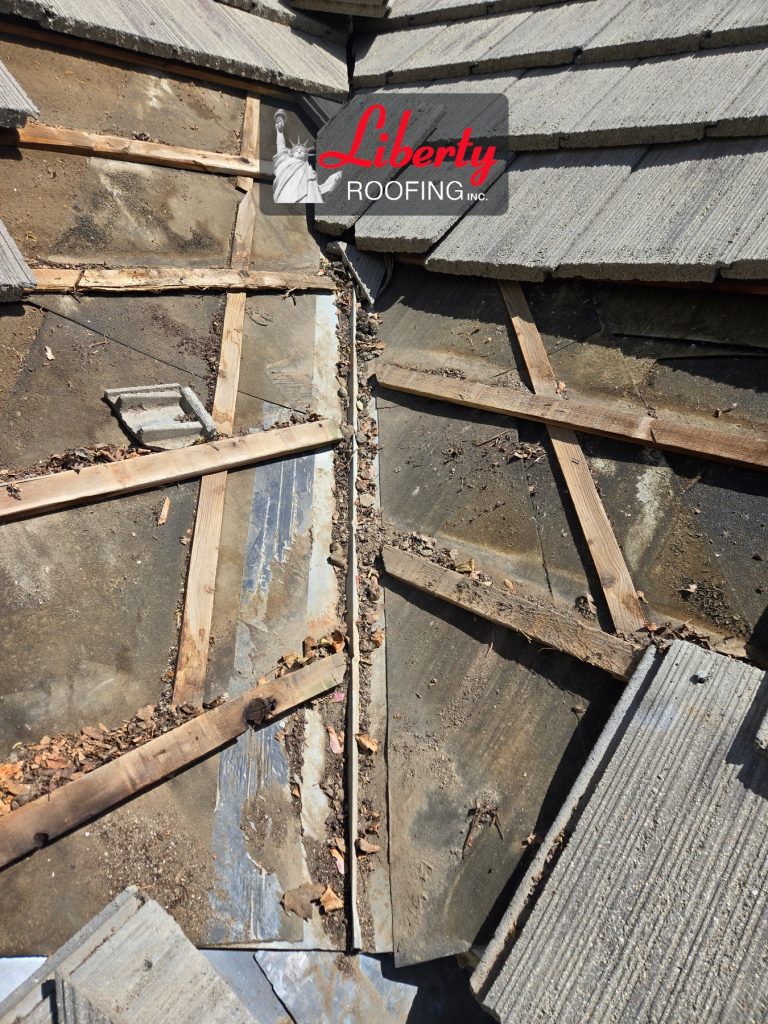
Finding the source of a roof leak requires an on-site evaluation of the affected area and the surrounding roof. For this Provo project, the work addressed the valley assembly by replacing its underlayment and metal flashing. The opened view shows the area those replacement materials needed to cover.
For a building owner, photographs from this stage also create a useful record. They show where the roof was opened and which components were accessible during the work. That record gives context to the next image, where the new valley materials are visible.
Replacing the Valley Underlayment and Metal Flashing
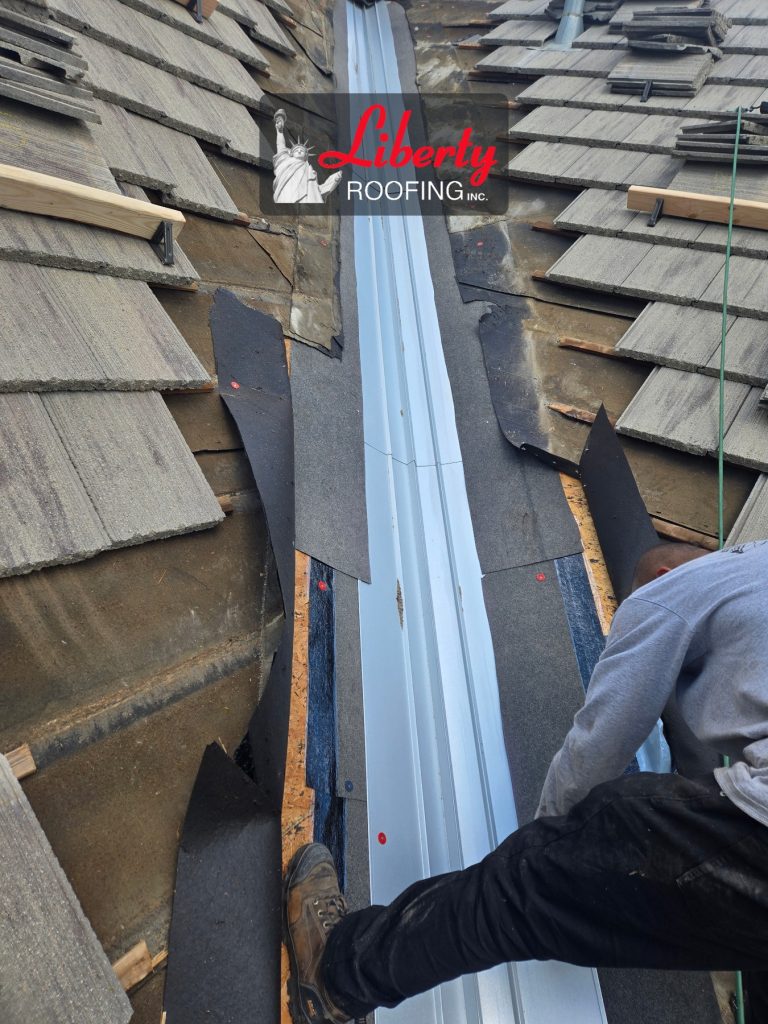
The installation photograph shows the new metal valley flashing extending through the work area, with new underlayment visible alongside it. The surrounding concrete tiles are still lifted or set aside, and a crew member is working in the opened section.
This is an installation-stage photograph. It shows the replacement materials before the surrounding tile covering is fully returned to position. That makes it especially helpful for understanding the work beneath the finished roof surface.
Why the Underlayment Is Part of the Repair
Underlayment sits beneath the visible roof covering. Here, the valley underlayment was replaced along with the metal flashing. The repair therefore included more than the exposed metal channel alone.
When reviewing a tile roof repair proposal, it is useful to ask which layers are included. A description that identifies both the underlayment and the metal flashing gives the owner a clearer understanding of the intended scope. It also helps distinguish replacement of materials from work limited to the surface.
Why the Metal Valley Flashing Matters
The metal flashing follows the valley between the adjoining roof slopes. In the second photo, its shape and position are visible through much of the opened area. Comparing the two valley photos shows the change from the existing materials to the new installation.
For more background on this part of the roof, read our guide to roof valley repair in Utah. The case study here provides a specific Provo example of valley work on a concrete tile roof.
Installing New Lead Pipe Flashing
On the same roof, Liberty Roofing installed new lead pipe flashing. The close-up photograph shows the flashing around the base of the roof pipe, with the surrounding gray concrete tiles in view.
The flashing addresses the junction between the pipe and the surrounding roof. Its broad base is visible against the concrete tiles, making the relationship between the penetration and roof covering easy to see. This close-up offers a useful view of a detail that can be difficult to examine from the ground.
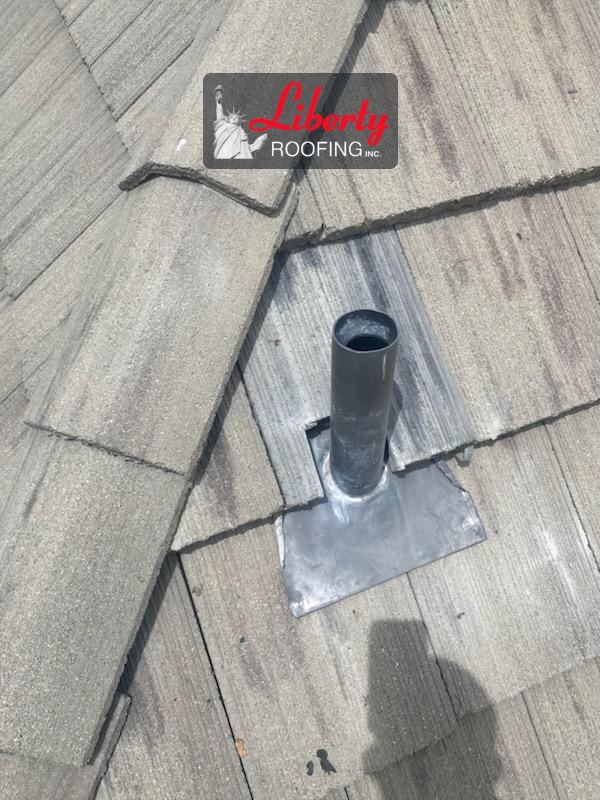
This detail is small compared with the full roof, but it is an important part of the project. It illustrates how a repair visit can include work at more than one location, with each location requiring attention to the materials and connections around it.
Our Utah roof flashing repair guide explains the broader role of flashing around pipes, chimneys, and other roof features. The Provo installation provides a local example of that work on a concrete tile roof.
How Tile, Underlayment, and Flashing Work Together
A tile roof is an assembly of components. The visible tiles, the underlayment below, and the flashing at transitions each have a role. A repair plan should consider the affected assembly rather than relying only on the appearance of the top surface.
The Tile Roofing Industry Alliance’s technical guidance explains that tile-roof penetrations need appropriate flashing at both the tile and deck/underlayment levels. The purpose is to preserve water flow at the surface and secondary protection below.
That industry guidance provides background for understanding why the hidden layers and penetration details deserve attention. The photographs in this case study show those different areas of a real roof: the opened valley, the replacement materials, and the pipe flashing above the tiles.
A Focused Repair Scope for This Provo Project
This project demonstrates a defined scope of tile roof repair: new underlayment and metal flashing in the leaking valley, plus new lead pipe flashing on the same roof. The two repair areas are shown in the project photographs.
A property owner considering similar work should ask how the proposed repair relates to the condition of the rest of the roof. The answer depends on what an inspection finds. The existence of a leak does not, by itself, describe the extent of work needed across the entire roof.
For example, an estimate can identify the specific valley or penetration involved, explain which materials will be removed, and describe the replacement work. Clear descriptions help the owner understand what the contractor is proposing and what the finished scope will include.
Liberty Roofing’s roof leak repair service is the relevant starting point for discussing an active leak. The broader roof repair service covers other repair needs that may be identified during an evaluation.
What the Project Photos Document
The three photographs provide complementary views of the work. The first shows the valley opened up. The second shows the replacement underlayment and metal flashing during installation. The third shows the new lead pipe flashing on the same concrete tile roof.
Together, they make the scope concrete. A reader can see the valley materials beneath the tile edges and then examine the separate flashing around the pipe. The photos also make clear that the valley installation view captures work in progress.
The project added new lead pipe flashing and replaced the underlayment and metal flashing at the leaking valley. It is an example of the detailed repair work Liberty Roofing performs in Provo and the surrounding Utah County area, where parts of a roof assembly can need attention beneath an existing tile covering.
Questions to Ask About a Similar Tile Roof Repair
Before approving work on your own roof, ask the contractor to explain the location and scope in plain language. A few practical questions can make the proposal easier to review:
- Which valley, flashing, or other area is involved in the repair?
- Which tiles need to be moved to reach that area?
- Does the scope include underlayment, metal flashing, or both?
- Is work around a roof pipe included as a separate item?
- How will any additional findings be documented and discussed?
- Will project photos be available for your records?
These questions help connect the proposed work to the actual building. They also give you a clearer record of the materials and areas included in the repair. For this Provo roof, the scope included both the valley replacement work and the new pipe flashing.
Frequently Asked Questions
What work was completed on this Provo concrete tile roof?
Liberty Roofing installed new lead pipe flashing and replaced the underlayment and metal flashing in a valley that was leaking. Both repair areas were on the same roof.
Were the valley photographs taken before or after the repair?
One photo shows the opened valley with the existing materials exposed. The other shows the new valley underlayment and metal flashing during installation, with nearby tiles still lifted or set aside.
Why do tiles need to be lifted for some valley repairs?
Tiles can cover the edges of the valley assembly and materials below. In this project, moving the nearby tiles provided access to the underlayment and metal flashing included in the repair scope.
Can a tile roof need flashing work even when tiles remain in place?
Yes. The flashing at a roof penetration is a separate detail from the tile covering. The pipe photograph in this case study shows new lead flashing surrounded by the existing concrete tiles.
How can I discuss tile roof leak repair in Provo?
Contact Liberty Roofing Utah with a description of the issue and any available photos or previous repair records. The team can discuss an evaluation and explain the repair options for your roof.
Request a Tile Roof Repair Estimate in Provo
If your concrete tile roof has a leaking valley or needs attention around a roof pipe, Liberty Roofing Utah can help you understand the next steps. This Provo project is one example of repair work involving the components beneath and around the visible tile covering.