

Key Takeaways
- Flashing helps direct water away from joints, walls, and roof penetrations.
- A stain near a chimney or skylight is a clue, not a diagnosis.
- A lasting repair should address the water entry point and any damaged surrounding materials.
- Ask for photos, a written scope, and clear information about what the repair includes.
- Observe from a safe location and leave rooftop inspection to a qualified professional.
What Is Roof Flashing?
Flashing is the protective material used where roofing meets another surface or where something passes through the roof. Shingles cover the broad roof areas; flashing handles many of the transitions. Think of the roof as a series of overlapping layers that guide water toward the edge.
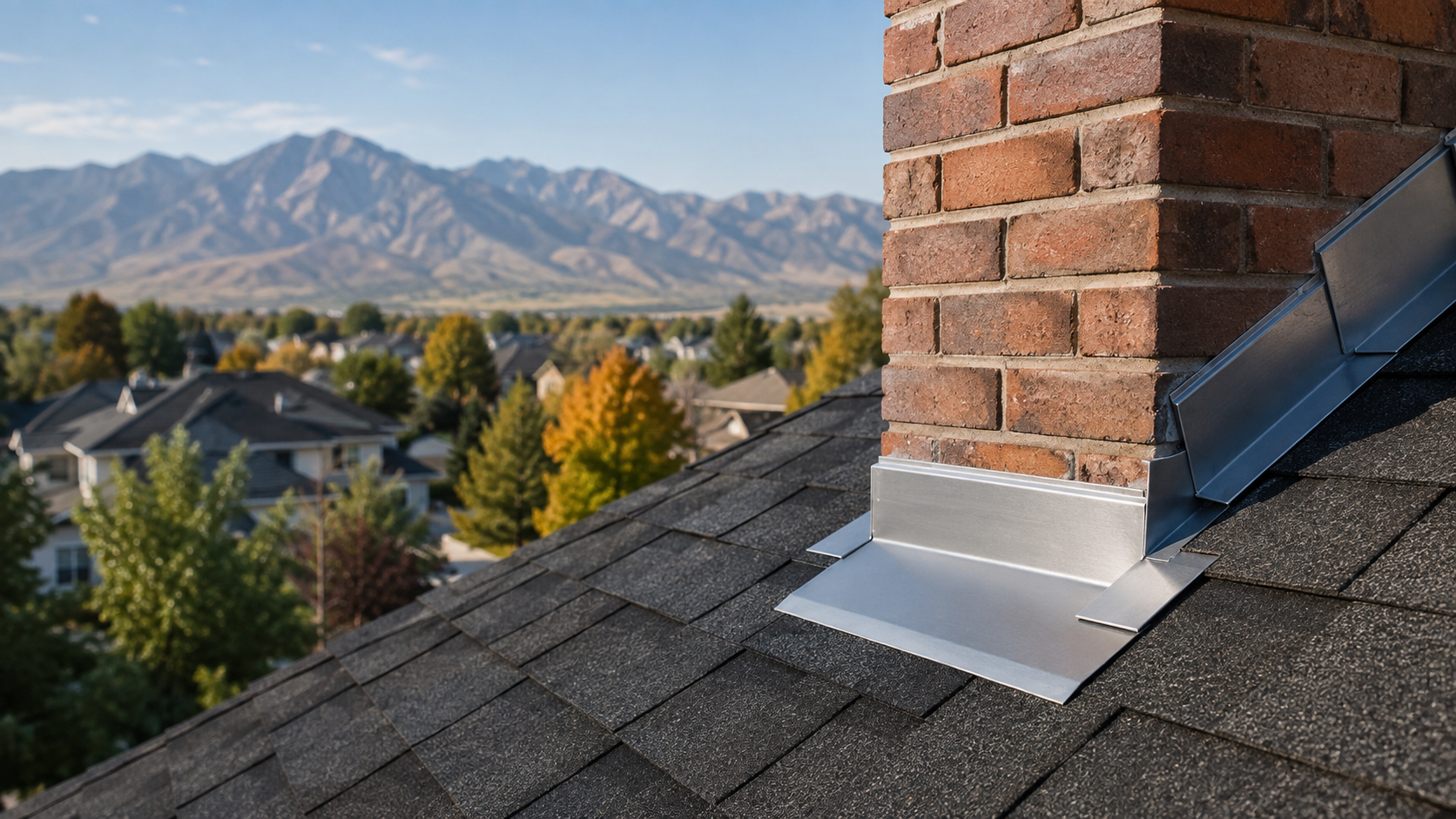
Common flashing locations include chimney bases, roof-to-wall intersections, plumbing vents, and skylights. Different details require different designs. A bent piece of metal that looks similar from a distance may serve a different purpose depending on its position.
GAF’s homeowner guide to roof flashing explains how these components protect roof joints and penetrations. The useful takeaway for homeowners is simple: an intact field of shingles does not tell the whole story about leak protection.
Three Places Worth Discussing During an Inspection
Chimneys and adjoining walls
A chimney interrupts the roof surface and creates several transitions. Ask the contractor to explain which side is affected and how the proposed work connects with the surrounding roof. A recommendation that says only “seal chimney” may leave important questions unanswered.
Also ask whether the concern involves the roofing connection, the masonry, or both. If another trade needs to repair the chimney, establish who will coordinate the work. Roofing repairs alone may not resolve a separate problem higher on the chimney.
Plumbing vents and other penetrations
The pipes extending through a roof need a weather-resistant connection at their bases. If the contractor identifies a worn pipe boot or damaged flashing, request a photo and the proposed replacement detail. Ask whether nearby shingles need to be removed and restored as part of the job.
GAF’s roof leak guide identifies deteriorated flashing around penetrations as one possible source of moisture entry. A professional inspection helps distinguish that condition from damage elsewhere on the roof.
Skylights
For a leak near a skylight, ask whether the issue is the roof connection, the skylight itself, or interior condensation. Those possibilities can require different solutions. Provide the skylight’s age and any available installation records, but avoid assuming that the entire unit needs replacement before it has been evaluated.
If replacement is recommended, ask which parts of the opening, flashing, and surrounding roofing are included. This makes it easier to compare the proposal with a targeted repair option.
Signs You May Need Roof Flashing Repair in Utah
You do not need to climb onto the roof to collect useful information. Start with what you can see indoors or from the ground. Keep a short record rather than trying to identify the failed component yourself.
- A ceiling mark that reappears after rain.
- Peeling paint near a roof-to-wall connection.
- Drips or discoloration near a skylight opening.
- Visible loose metal around a roof feature.
- A previously patched area that continues to leak.
- A change in the stain after a particular storm.
Photograph the location and include a wider view showing the room or nearby feature. Note when you first noticed it, whether it was wet, and whether its size changed. These details are more useful than a guess about which product to apply.
A dry mark may be old damage, while a recurring mark deserves investigation. Likewise, a leak that appears to be near a chimney is not proof that chimney flashing is responsible. Ask the contractor how the evidence supports the diagnosis.
Why September Is a Good Time to Make a Repair Plan
If you already know an area leaks, use September to arrange an assessment, review the scope, and coordinate any related work. The advantage is having time to make decisions before the next weather event, rather than choosing a repair under pressure.
A calendar date does not guarantee suitable roofing weather. Ask the contractor how rain, temperatures, access, and material requirements affect the proposed work. A useful plan includes what happens if the weather changes before the repair is complete.
The National Weather Service Salt Lake City office provides local forecasts and advisories. Check the forecast for your location instead of relying on conditions in another part of the valley. For project timing, confirm the contractor’s current availability directly.
What to Ask Before Approving the Repair
The most helpful estimate explains the problem in plain language. You should understand where the work will happen, what will be replaced, and what remains outside the scope. Use these questions during your conversation:
- Where is the suspected entry point? Ask for a photo or a simple explanation of how it relates to the interior symptom.
- What supports the diagnosis? Ask whether the contractor found visible damage or whether further investigation is needed.
- What materials will be removed? Clarify whether the work includes adjoining shingles, flashing, or damaged roof decking.
- What happens if hidden damage is found? Agree on how additional work will be documented and approved.
- What does completion include? Discuss cleanup, photos, and any recommended follow-up.
- What warranty applies? Request the written terms for the specific repair.
These questions are especially useful when two estimates use different descriptions. One contractor may be pricing a temporary measure while another includes removal and reconstruction of the affected connection. Compare the work, not just the totals.
Resealing, Flashing Replacement, or a Larger Repair?
Ask the contractor to distinguish the immediate symptom from the underlying condition. If a proposal calls for resealing, ask why that is appropriate for this location and whether it is a temporary or intended long-term repair. If replacement is recommended, ask what makes the existing detail unsuitable to keep.
Sealant can be part of a roofing detail, but the recommendation should describe more than the product name. You need to understand how the repaired area will manage water and connect with the surrounding materials.
In some cases, the discussion may expand beyond flashing. Nearby shingles or underlying materials may need attention, or the overall roof condition may influence the best approach. Ask for separate explanations of necessary work and optional improvements so you can make an informed decision.
Liberty Roofing Utah’s roof repair services are a starting point for discussing the issue. A site-specific recommendation is more useful than choosing a repair based solely on a photograph or the age of the house.
What About Water Collecting Behind a Chimney?
A chimney can interrupt drainage on the uphill side of a roof. A cricket is a small raised roof feature designed to direct water around that obstruction. Whether one is appropriate depends on the roof and chimney configuration, applicable requirements, and the roofing system.
If the inspection identifies a problem behind the chimney, ask whether drainage is contributing. GAF’s guide to chimney crickets explains their role. This is a detail for a professional to evaluate, rather than a reason to assume every chimney needs the same alteration.
A Simple Homeowner Preparation Checklist
Before the appointment, gather any roof installation records, repair invoices, and photos of earlier leaks. If you do not have them, write down what you remember. An approximate history is still helpful when clearly identified as an estimate.
Make a list of the questions you want answered. Include access arrangements, pets, parking, and the best person to contact about findings. If someone else manages the property, agree on who can approve additional work before the inspection begins.
After receiving the proposal, check that the affected location is clearly identified. “North side of chimney” is more useful than “roof repair.” Keep the final invoice and completion photos with your home records so future contractors can understand what was done.
If the symptom returns, send a new photo and describe when it happened. Avoid making additional repairs yourself before discussing the issue with the contractor, because changes can make the original condition harder to evaluate.
Address the Leak Before It Becomes a Recurring Project
A useful roof repair starts with a clear diagnosis and ends with a documented scope of work. For homeowners across Utah County and Sandy, checking vulnerable roof connections now can help turn an uncertain leak into a manageable repair decision.
You do not need to know every roofing term. Focus on three questions: where is water entering, what will the repair change, and how will the surrounding roof be protected? Clear answers make it easier to move forward with confidence. Keep those answers with your estimate so everyone shares the same expectations.
Related Roofing Resources
Frequently Asked Questions
Can flashing need repair when the shingles look fine?
Yes. Flashing protects roof transitions that are separate from the broad shingle surface. A contractor should evaluate those connections along with the surrounding roofing.
Does a chimney leak mean I need a new roof?
Not necessarily. Ask whether the problem is localized and whether the remaining roofing supports a targeted repair. The inspection should guide that decision.
Can I fix flashing with caulk?
Do not assume a surface patch will address the cause. Ask a roofer to identify the problem and explain whether sealing, replacement, or another repair is appropriate.
How much does roof flashing repair in Utah cost?
The scope, access, affected materials, and hidden damage influence the price. Request a written estimate for your roof rather than relying on a general price range.
Should I wait until winter to investigate a small leak?
Arrange an assessment when you notice the problem. You can then discuss its urgency and an appropriate repair window instead of waiting for it to recur.
What should I send when requesting an estimate?
Send your property location, a description of the issue, safe-to-take photos, and any relevant repair history. Let the contractor explain what additional inspection is needed.
Concerned About a Leak Around Your Chimney, Vent, or Skylight?
Contact Liberty Roofing Utah to discuss your roof and request a free estimate. We serve Provo, Orem, Lehi, American Fork, Spanish Fork, Sandy, and surrounding communities.