

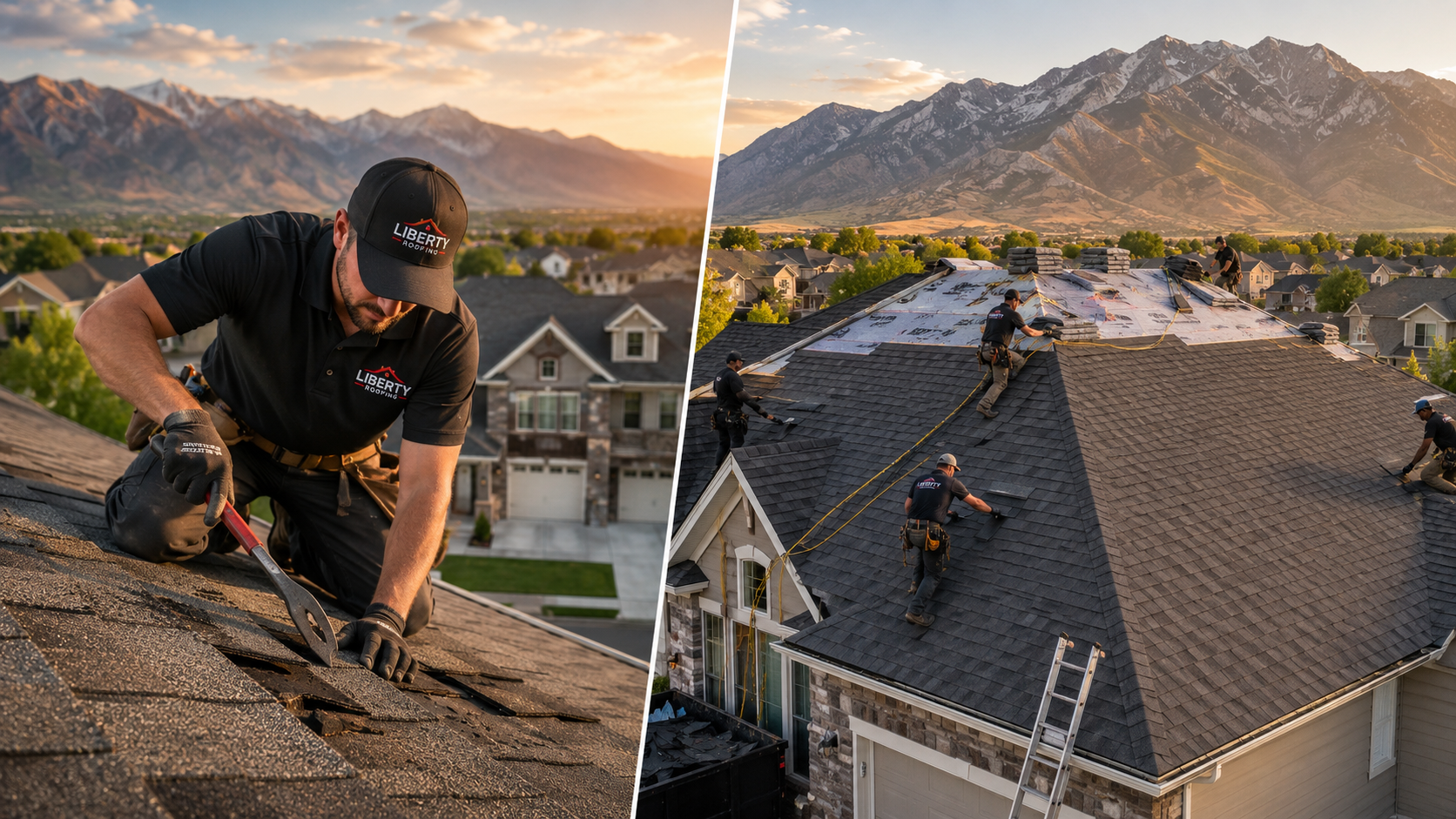
If you’ve discovered a roof leak, noticed missing shingles, or your roof is showing signs of age, one of the first questions you’ll probably ask is, “Should I repair my roof or replace it?” It’s an important decision because the wrong choice could cost you thousands of dollars over time.
While many homeowners assume a roof repair is always the least expensive option, that’s not necessarily true. In some cases, investing in a roof replacement can actually save money by eliminating recurring repairs, improving energy efficiency, and providing decades of dependable protection. On the other hand, many roofing problems can be resolved with professional repairs if they’re identified early.
Understanding the difference between repairable damage and conditions that require replacement helps homeowners make informed decisions and avoid unnecessary expenses. Whether you live in Provo, Orem, Lehi, American Fork, Spanish Fork, Sandy, or another nearby community, knowing what to look for can help protect both your home and your budget.
Key Takeaways
- Roof repairs are often the most cost-effective solution when damage is limited to a small area.
- Older roofs with widespread deterioration often provide better long-term value through replacement.
- Multiple repairs over several years may ultimately cost more than installing a new roof.
- Professional inspections remove the guesswork and help homeowners make confident decisions.
- Addressing roofing problems early helps prevent water damage, mold growth, and structural repairs.
What Determines Whether You Should Repair or Replace Your Roof?
Every roof is different. While two homes may appear similar from the outside, factors such as roof age, previous repairs, storm damage, and installation quality all influence whether repairs are still practical.
Professional roofing contractors typically evaluate several important factors before making a recommendation.
Age of the Roof
The age of your roof is often one of the biggest factors in deciding between repair and replacement. A roof that’s only eight or ten years old may have decades of life remaining, making repairs a smart investment. However, if your roof is approaching the end of its expected lifespan, replacing it may provide greater long-term value than continuing to repair aging materials.
Extent of the Damage
Small areas of damage caused by wind, fallen branches, or isolated leaks are often repaired quickly and economically. However, widespread hail damage, multiple leaks, or deteriorating shingles across the entire roof usually indicate larger underlying issues.
Overall Roof Condition
Even if the immediate problem appears small, roofing professionals evaluate the condition of the surrounding materials. If shingles are becoming brittle, flashing is failing, or the roof deck has suffered water damage, replacing the roof may prevent future problems and additional repair costs.
Future Plans for Your Home
If you plan to remain in your home for many years, investing in a new roof may provide greater peace of mind and increase your property’s value. Homeowners preparing to sell may also benefit from replacing an aging roof, as buyers often view a new roof as a significant advantage during the purchasing process.
When Roof Repair Is the Smarter Investment
Not every roofing problem requires a complete replacement. In many situations, professional repairs can restore your roof’s performance while extending its lifespan for many more years.
Roof repair is often the best option when:
- Only a few shingles have been damaged by wind.
- Flashing around a chimney or vent requires replacement.
- A small leak has been identified early.
- Storm damage is limited to one section of the roof.
- Your roof is still relatively new and in otherwise excellent condition.
- The underlying roof decking remains structurally sound.
Timely repairs help prevent moisture from spreading into insulation, drywall, and structural framing while preserving the overall life of your roofing system.
Common Roof Problems That Can Usually Be Repaired
Many homeowners are surprised to learn that some of the most common roofing problems can be corrected without replacing the entire roof.
Missing or Lifted Shingles
High winds can loosen or remove individual shingles without affecting the rest of the roof. Replacing these damaged shingles promptly helps restore your roof’s weather resistance.
Damaged Flashing
Flashing around chimneys, skylights, plumbing vents, and roof valleys is one of the most common sources of roof leaks. Replacing deteriorated flashing is often a straightforward repair when caught early.
Minor Hail Damage
Not every hailstorm requires a new roof. If damage is localized and the shingles remain structurally sound, repairs may restore the roof without the expense of full replacement.
Ventilation Issues
Poor attic ventilation can shorten the lifespan of roofing materials and increase energy costs. Correcting ventilation problems often improves roof performance while helping prevent future deterioration.
When Roof Replacement Is the Better Long-Term Investment
Although many roofing problems can be repaired, there comes a point when replacing the roof becomes the smarter financial decision. Investing in a new roof may require a larger upfront expense, but it can eliminate ongoing repair costs, improve your home’s energy efficiency, and provide decades of reliable protection.
If your roof has experienced years of weather exposure or repeated repairs, replacing it may actually cost less over the long term than continuing to patch individual problems.
A roof replacement is often recommended when:
- Your roof is approaching or has exceeded its expected lifespan.
- Multiple leaks are developing in different areas.
- Storm damage affects large sections of the roof.
- Shingles are curling, cracking, or losing excessive granules.
- The roof decking has sustained water damage.
- You have already invested in several repairs over the past few years.
Rather than continuing to invest in an aging roof, replacing it can provide greater peace of mind and lower maintenance costs for many years to come.
Repair Costs vs. Replacement Costs
One of the biggest misconceptions homeowners have is that repairing a roof is always the least expensive option. While repairs generally require a much smaller initial investment, they are not always the most economical long-term solution.
Consider these factors when comparing repair and replacement:
Initial Cost
Roof repairs typically cost significantly less than replacing an entire roof because only the damaged area is repaired. This makes repairs an excellent option when the roof is otherwise in good condition.
Long-Term Value
If your roof is nearing the end of its useful life, repeated repairs may become increasingly common. Those repair costs can quickly add up over several years, making replacement the more cost-effective investment.
Energy Efficiency
Modern roofing systems often include improved underlayments, ventilation components, and energy-efficient materials that can help regulate attic temperatures and reduce heating and cooling costs.
Warranty Protection
While individual repairs may include workmanship warranties, a complete roof replacement generally provides much broader manufacturer and installation warranty coverage, offering homeowners greater long-term protection.
Why Waiting Can Cost You More
One of the most expensive mistakes homeowners make is delaying roof repairs after damage has already occurred. What begins as a minor issue can quickly spread throughout the roofing system if moisture is allowed to penetrate beneath the shingles.
Ignoring roofing problems may eventually lead to:
- Water-damaged roof decking
- Mold and mildew growth
- Damaged attic insulation
- Interior drywall repairs
- Ceiling stains
- Rotting structural framing
- Higher heating and cooling costs
Addressing roofing issues while they are still small is almost always less expensive than repairing extensive water damage months later.
How Insurance May Affect Your Decision
If your roof has been damaged by hail, wind, or another covered weather event, your homeowner’s insurance policy may help cover some or all of the repair or replacement costs. Every policy is different, so it’s important to understand your specific coverage and deductible.
A professional roof inspection can help identify storm-related damage and provide documentation that may be useful during the claims process.
Even when insurance is involved, it’s important to have an experienced roofing contractor evaluate the roof’s overall condition before deciding whether repairs or replacement provide the best long-term solution.
Age Isn’t the Only Factor
Although the age of your roof plays an important role in determining whether repairs or replacement make sense, it should never be the only consideration.
A well-maintained roof that is twenty years old may still have years of service remaining, while a poorly installed roof that is only twelve years old could require extensive repairs or replacement.
Every roof ages differently based on installation quality, maintenance history, ventilation, weather exposure, and the roofing materials used. That’s why a professional inspection is the best way to determine the condition of your roof rather than relying solely on its age.
What Happens During a Professional Roof Inspection?
If you’re unsure whether your roof needs repairs or a complete replacement, the first step is scheduling a professional roof inspection. An experienced roofing contractor can identify existing damage, evaluate the overall condition of your roofing system, and provide recommendations based on facts rather than guesswork.
At Liberty Roofing Utah, every inspection is designed to give homeowners a clear understanding of their roof’s condition so they can make confident decisions.
Exterior Roof Inspection
The inspection begins with a thorough evaluation of the roof’s exterior. Roofing professionals look for damaged or missing shingles, granule loss, cracked flashing, storm damage, deteriorated sealants, and signs of normal aging.
Flashing and Roof Penetrations
Special attention is given to chimneys, skylights, plumbing vents, valleys, and other roof penetrations where leaks commonly develop. These areas are carefully inspected for separation, corrosion, or damaged sealants.
Gutters and Drainage
Your gutter system provides valuable clues about your roof’s condition. Inspectors look for excessive granule loss, storm damage, improper drainage, and debris that could allow water to back up beneath the roofing materials.
Attic Evaluation
When accessible, the attic is inspected for signs of moisture intrusion, water staining, mold, inadequate ventilation, and daylight entering through the roof decking. Many roofing problems become visible from inside the attic before they appear elsewhere.
Professional Recommendations
After completing the inspection, you’ll receive an honest assessment of your roof’s condition along with recommendations for repairs, maintenance, or replacement if necessary. The goal is to help you make the best long-term decision for your home—not simply recommend the most expensive option.
Why Homeowners Across Utah County Choose Liberty Roofing Utah
Choosing a roofing contractor is just as important as choosing the right roofing materials. Experience, workmanship, and honest communication all play a major role in protecting your investment.
Liberty Roofing Utah proudly serves homeowners and businesses throughout Provo, Orem, Lehi, American Fork, Spanish Fork, Sandy, and surrounding communities with dependable residential and commercial roofing services.
Whether you need a small roof repair after a windstorm, an inspection following hail damage, or a complete roof replacement, our team is committed to providing quality workmanship, premium materials, and straightforward recommendations you can trust.
Every roofing project begins with understanding your needs, carefully evaluating your roof, and recommending the solution that provides the best long-term value for your home or business.
Related Roofing Resources
Looking for more information about protecting your roof? Explore these helpful resources from Liberty Roofing Utah:
- Roof Repair Services – Learn about common roofing repairs and how addressing small problems early can extend the life of your roof.
- Roof Replacement Services – Discover when replacing your roof becomes the better long-term investment.
- Residential Roofing – Explore our complete residential roofing solutions for homeowners throughout Utah County.
- Contact Liberty Roofing Utah – Schedule a professional roof inspection or request a free estimate from our experienced team.
Repair Your Roof… or Replace It? Get Expert Advice Before You Decide.
Making the right roofing decision starts with understanding the condition of your roof. Our experienced team will perform a thorough inspection, explain your options clearly, and recommend the solution that provides the best value for your home and budget.
Whether your roof needs a simple repair or it’s time for a complete replacement, Liberty Roofing Utah is here to help homeowners throughout Provo, Orem, Lehi, American Fork, Spanish Fork, Sandy, and surrounding communities make confident decisions.
Frequently Asked Questions
Is it cheaper to repair or replace a roof?
Repairs usually cost less initially, but if your roof is nearing the end of its lifespan or requires frequent repairs, a replacement may provide better long-term value.
How many roof repairs are too many?
If your roof requires repairs every year or multiple areas are failing at the same time, it may be more economical to replace the roof rather than continue investing in repairs.
Can only one section of a roof be replaced?
Yes. If the damage is isolated and the surrounding roofing materials remain in good condition, replacing a single section may be an appropriate solution.
Does homeowners insurance cover roof replacement?
Many insurance policies cover replacement when damage results from a covered event such as hail or wind. Coverage varies by policy, so reviewing your policy and scheduling a professional inspection is recommended.
How long does a roof replacement usually take?
Most residential roof replacements can be completed within one to several days depending on the size of the home, weather conditions, and roofing materials being installed.
How can I know whether my roof should be repaired or replaced?
A professional roof inspection is the best way to determine the condition of your roof. An experienced roofing contractor can evaluate its age, damage, and remaining lifespan before recommending the most appropriate solution.
Questions to Ask Before Deciding Between Roof Repair and Replacement
Before investing in any roofing project, it’s important to understand the condition of your roof and the long-term value of your options. Asking the right questions can help you avoid unnecessary expenses and ensure you’re making the best decision for your home.
How Old Is My Roof?
If your roof is still relatively new and the damage is isolated, a professional repair is often the most practical solution. However, if your roof is approaching the end of its expected lifespan, replacement may provide greater long-term value.
Is the Damage Limited or Widespread?
A few missing shingles or damaged flashing can usually be repaired without replacing the entire roof. Widespread storm damage, multiple leaks, or deteriorating shingles across large sections of the roof often indicate that replacement should be considered.
Have I Repaired This Roof Before?
Occasional repairs are a normal part of roof ownership. However, if you’re calling a roofing contractor every year to fix new problems, it may be more cost-effective to invest in a complete roof replacement instead of continuing to patch an aging roofing system.
Will Repairs Match My Existing Roof?
Depending on the age of your roof and whether the original shingles are still available, repaired sections may not perfectly match the existing roofing materials. This is an important consideration for homeowners concerned about curb appeal and resale value.
What Is the Long-Term Cost?
The least expensive option today isn’t always the least expensive over the next ten years. When evaluating repair versus replacement, consider future maintenance, energy efficiency, warranty coverage, and the likelihood of additional repairs.
Making the Right Decision Starts with a Professional Inspection
Every roof is different. Factors such as age, installation quality, previous repairs, storm damage, ventilation, and roofing materials all influence whether repair or replacement is the better investment.
Rather than making a decision based solely on the age of your roof or a visible leak, schedule a professional inspection to receive an accurate assessment of its overall condition. An experienced roofing contractor can identify hidden issues, explain your options, and recommend the solution that provides the greatest long-term value for your home.