

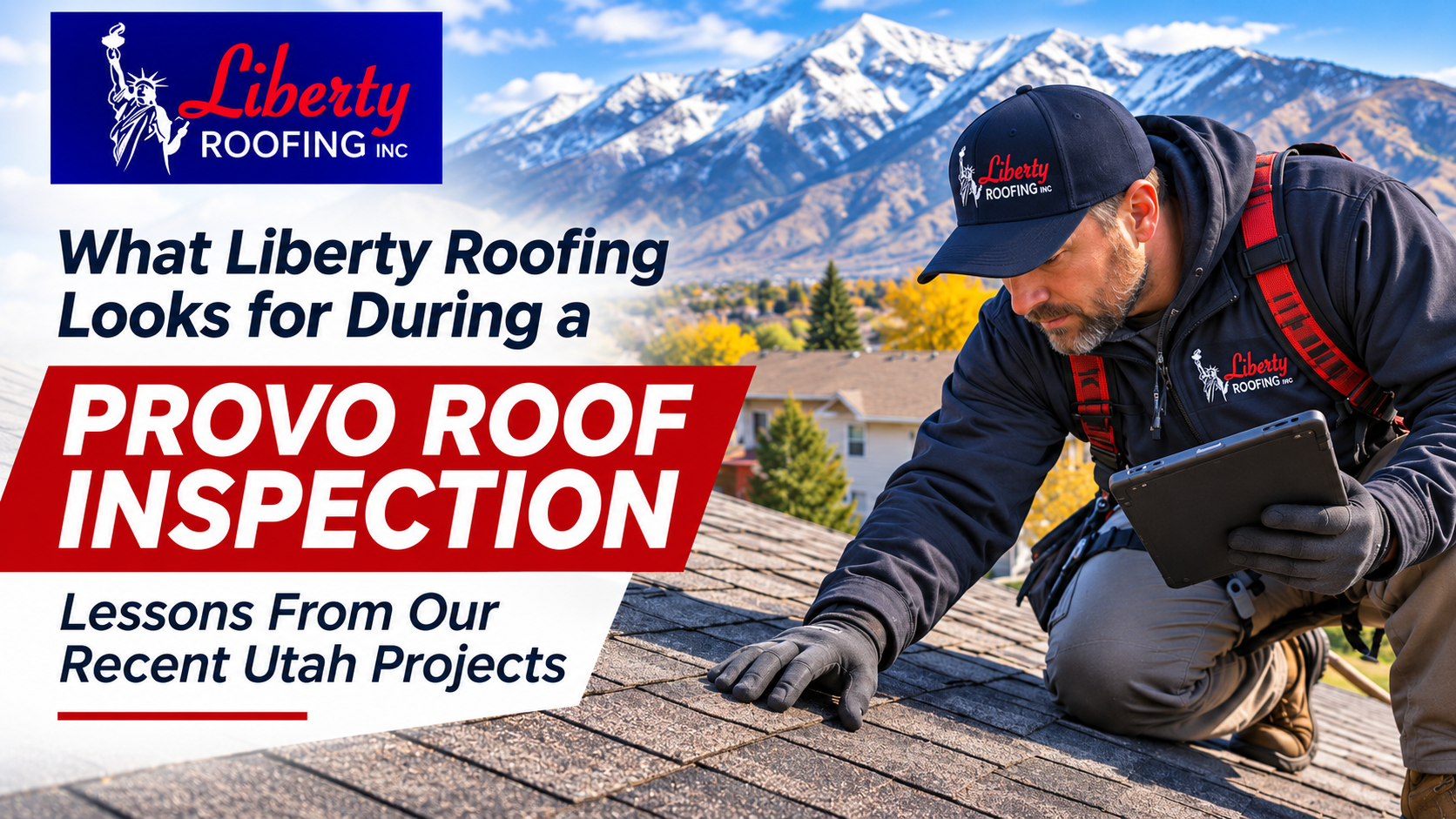
What Liberty Roofing Looks for During a Provo Roof Inspection: Lessons From Our Recent Utah Projects
A Provo roof inspection should do more than confirm whether shingles or tiles are still in place. At Liberty Roofing Utah, the goal is to understand how the complete roofing system is performing, where water is most likely to enter, and whether a homeowner needs maintenance, a focused repair, or a larger roofing project.
That approach is based on the roofs our crews actually work on throughout Provo and Utah County. Recent Liberty projects have included a leaking concrete tile valley in Provo, new lead flashing around a roof pipe on the same home, complete tear-offs that exposed aging roof decking in Pleasant Grove, commercial roofs with recurring leaks, and larger structural repairs where damaged decking had to be replaced before a new roofing system could be installed.
Those projects reinforce an important point: the visible roof surface is only part of the story. When Liberty Roofing evaluates a roof, we look closely at the transitions, penetrations, drainage paths, hidden layers, and evidence inside the building that can reveal where a roofing system is beginning to fail.
What Our Recent Provo Tile Roof Repair Taught Us
One of Liberty Roofing’s recent Provo projects involved a concrete tile roof with two separate repair areas. The homeowner had a leaking roof valley, and the repair required more than simply replacing a few visible tiles. Our crew lifted the surrounding concrete tiles, replaced the valley underlayment and metal flashing, and then returned the tile covering to position.
On that same roof, Liberty also installed new lead flashing around a roof pipe. These were two different leak-risk areas on one roofing system: a valley that carries concentrated water flow and a penetration where a pipe passes through the roof.
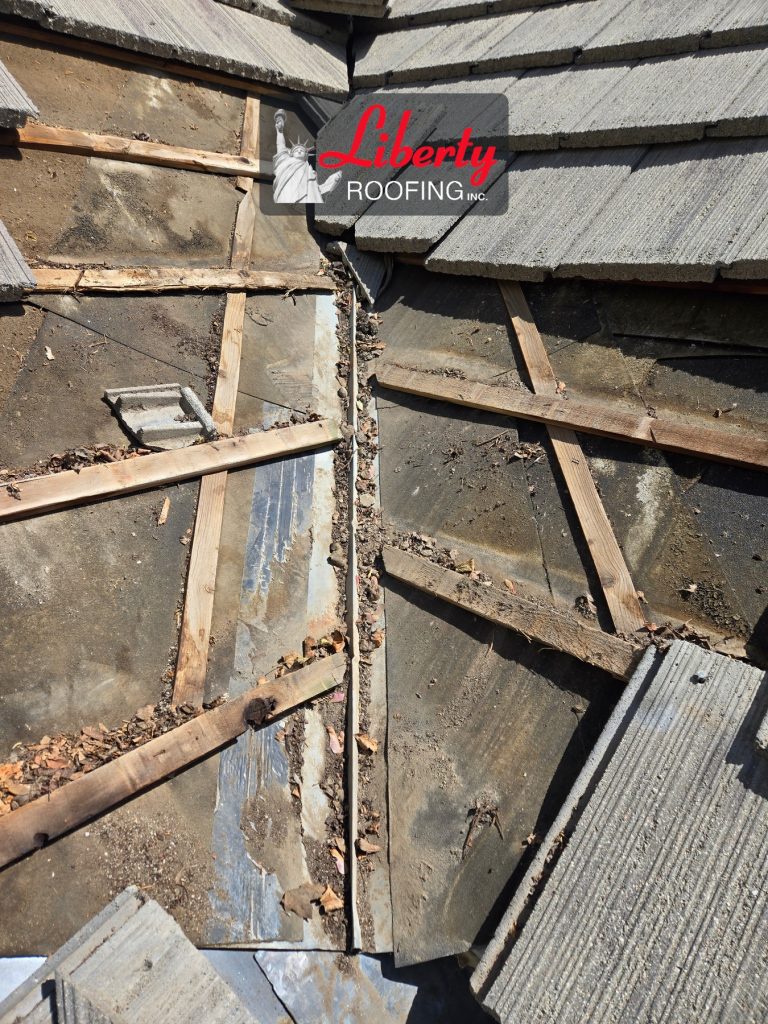
This is exactly why an inspection cannot stop at what is visible from the driveway. The tiles themselves were only one component. The water-management materials underneath and between roof sections were central to the repair.
See the complete Provo tile roof leak repair case study for the before, installation, and flashing photographs from that project.
1. Liberty Starts With the Reported Problem—but Does Not Stop There
When a homeowner calls about a roof leak, stain, missing shingle, or storm concern, that information gives us a starting point. It does not automatically identify the source.
Water can travel beneath roofing materials before it becomes visible inside a house. A ceiling stain may appear several feet away from the point where water first entered. On tile roofs, the visible covering can also conceal underlayment and flashing conditions that need attention.
That is why Liberty evaluates the surrounding roof area rather than treating the first visible symptom as the entire diagnosis. We want to understand the path water can take through the roof assembly and whether there are nearby details contributing to the problem.
2. Roof Valleys Receive Special Attention
Valleys are one of the first places our team pays attention to when the roof design includes them. Two roof slopes direct water into a relatively narrow channel, so the valley must manage more concentrated flow than the broad field of the roof.
Our recent Provo tile project is a good example. The repair included both new underlayment and new metal valley flashing. Once the tiles were lifted, the underlying materials could be evaluated directly rather than relying on the appearance of the concrete tiles above.
During an inspection, Liberty looks for conditions such as damaged materials, debris buildup, previous repairs, movement, or other details that could interfere with water flow through the valley.
For more background, Liberty’s roof valley repair guide explains why these channels deserve close attention.
3. We Inspect Flashing and Roof Penetrations as Individual Details
Chimneys, plumbing pipes, skylights, vents, walls, and other penetrations interrupt the main roofing surface. Each transition requires a detail that directs water around the opening and back onto the drainage path of the roof.
On the recent Provo concrete tile project, Liberty installed new lead flashing around a roof pipe. The work was separate from the valley repair, even though both were completed on the same home.
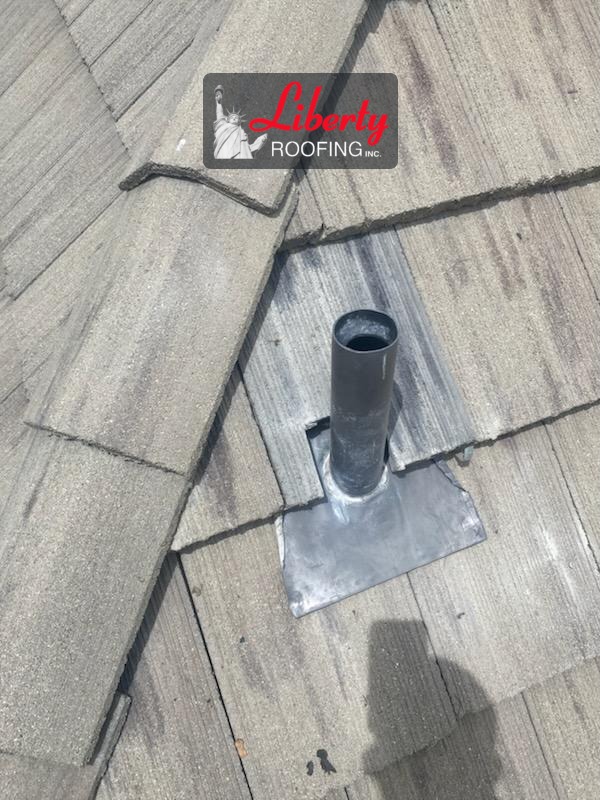
That project illustrates how a roof inspection may reveal more than one maintenance or repair need. A contractor should be able to identify each affected area and explain whether it is part of the same leak path or a separate detail that deserves attention.
The Tile Roofing Industry Alliance technical guidance provides additional industry background on flashing and tile-roof details. Liberty’s project photos show what those details look like on an actual Provo home.
4. We Look Beyond the Roof Covering to the Decking Below
Some roofing conditions cannot be fully evaluated until old material is removed. Liberty’s Pleasant Grove TPO replacement for homeowner Scott is a good example of why the substrate matters.
That project involved removing several layers of old roofing, installing new wood roof decking, and building the new TPO roofing assembly from that new surface. The project was not simply a membrane change; it included rebuilding the base beneath the new roofing.

During a normal inspection, the decking is not always exposed. Liberty therefore looks for clues that may justify closer evaluation: soft or sagging areas, recurring leaks, interior moisture evidence, visible deterioration from accessible attic areas, or previous repair history.
Our roof decking repair guide explains the warning signs in more detail.
5. Attic and Interior Evidence Can Be as Important as the Exterior
A roofing inspection is stronger when exterior conditions are compared with what is happening inside the building. Ceiling stains, damp insulation, discoloration on roof decking, or recurring moisture in the same area can help narrow the investigation.
This is especially important when the exterior surface looks relatively normal. Water can enter at a flashing detail or transition and travel before it becomes visible. Looking at both sides of the roof assembly can help distinguish a roofing leak from condensation or another moisture source.
When attic access is available and appropriate, Liberty uses that information as part of the overall evaluation rather than relying on a single exterior observation.
6. We Look for Evidence of Previous Repairs
Previous work can tell a story. Patches, sealant, replacement shingles, membrane repairs, changed flashing, or repeated work in the same area may indicate that a problem has been addressed before.
That does not automatically mean the previous repair was wrong. It does mean Liberty wants to understand whether the repaired area is still performing and whether the current problem is connected to it.
For homeowners, this is one reason to keep roofing invoices and project photographs. Liberty’s own case studies document before, during, and completed stages because those records make later evaluation easier.
7. We Consider Whether Repair or Replacement Actually Fits the Condition
A roof leak does not automatically mean the entire roof needs to be replaced. Liberty’s recent Provo tile project was a focused repair: the leaking valley received new underlayment and metal flashing, and the roof pipe received new lead flashing.
By contrast, other Liberty projects required complete tear-offs, new decking, or full membrane replacement because the condition and project scope were fundamentally different.
That distinction matters to homeowners. The purpose of the inspection is to identify the actual scope of the problem. If a localized repair is appropriate, the recommendation should explain what will be repaired. If replacement makes more sense, the homeowner should understand what conditions support that recommendation.
Liberty’s guide to roof repair vs. roof replacement provides additional examples of the factors involved.
8. We Pay Attention to Drainage, Debris, and the Way Water Moves
Roofing materials do not work in isolation. Valleys, gutters, downspouts, drains, scuppers, slopes, and perimeter details all influence where water goes.
On steep-slope homes, debris in valleys or gutters can interfere with normal drainage. On low-slope roofs, standing water or restricted drains may point to maintenance or slope concerns. Liberty’s residential and commercial work gives our team experience with both types of drainage conditions.
An inspection should therefore answer a basic question: when water lands on this roof, does the system have a clear, reliable path to move it away from vulnerable areas?
9. Liberty Uses Project Photos to Make Recommendations Easier to Understand
One of the most useful parts of Liberty’s recent project documentation is that homeowners and building owners can see the conditions being discussed. The Provo tile project shows the valley before repair, the new underlayment and flashing during installation, and the completed lead pipe flashing. The Pleasant Grove project shows old roofing removed, new decking installed, and the new roofing system taking shape.
When an inspection leads to a repair recommendation, photographs help connect the recommendation to a real condition. They also create a record that can be referenced later if the roof is inspected again.
What a Liberty Roofing Inspection Is Designed to Answer
By the end of an inspection, the homeowner should have a clearer understanding of several practical questions:
- Where is the likely problem area?
- Is the issue localized or widespread?
- Which roofing components are involved?
- Is there evidence of water reaching the decking or interior?
- Does the roof need maintenance, repair, or replacement?
- Are there other vulnerable details worth addressing at the same time?
- What should be monitored if no immediate work is required?
That is the standard Liberty Roofing aims for: a recommendation tied to the actual roof, not a generic checklist or one-size-fits-all answer.
Liberty Roofing’s Provo Experience Matters
Liberty Roofing works throughout Provo, Orem, Lehi, American Fork, Spanish Fork, Sandy, and surrounding communities, but Provo remains one of the company’s strongest service areas. Our recent work there includes concrete tile leak repairs, flashing work, inspections, residential repairs, and broader roofing projects across Utah County.
If you are comparing contractors, look for a roofer that can show real work from the area and explain what was actually repaired. Liberty’s growing project portfolio is designed to do exactly that.
Learn more about Liberty Roofing’s Provo roofing services and roof inspection and maintenance services.
Frequently Asked Questions About Liberty Roofing Roof Inspections
Does every roof leak require a complete roof replacement?
No. Liberty’s recent Provo tile project is an example of a focused repair involving a leaking valley and pipe flashing. The correct scope depends on the roof’s age, condition, materials, and the extent of the problem.
Can Liberty inspect tile roofs in Provo?
Yes. Liberty Roofing’s recent Provo case study documents work on a concrete tile roof, including valley underlayment, metal flashing, and lead pipe flashing.
Can an inspection identify damaged roof decking?
Sometimes decking problems are visible from accessible attic areas or indicated by sagging, moisture, recurring leaks, or soft areas. Other decking conditions become fully visible only when roofing materials are removed.
Why does Liberty inspect flashing so closely?
Flashing protects roof transitions and penetrations where water must be redirected around chimneys, pipes, valleys, skylights, walls, and other interruptions in the roofing surface.
Should I have my roof inspected if there is no visible leak?
An inspection can still be useful if the roof is aging, has experienced storms, has a history of repairs, or contains details you want evaluated before a problem becomes visible inside the home.
Does Liberty provide roof inspections outside Provo?
Yes. Liberty Roofing serves Provo, Orem, Lehi, American Fork, Spanish Fork, Sandy, and surrounding Utah communities.
Related Liberty Roofing Resources
Want Liberty Roofing to Take a Closer Look at Your Roof?
If you are seeing a leak, ceiling stain, damaged flashing, missing roofing material, or simply want a clearer picture of your roof’s condition, Liberty Roofing can inspect the system and explain what we find. Our recommendations are based on the actual roof in front of us and the type of work the condition requires.