

Quick Answer for Utah Homeowners
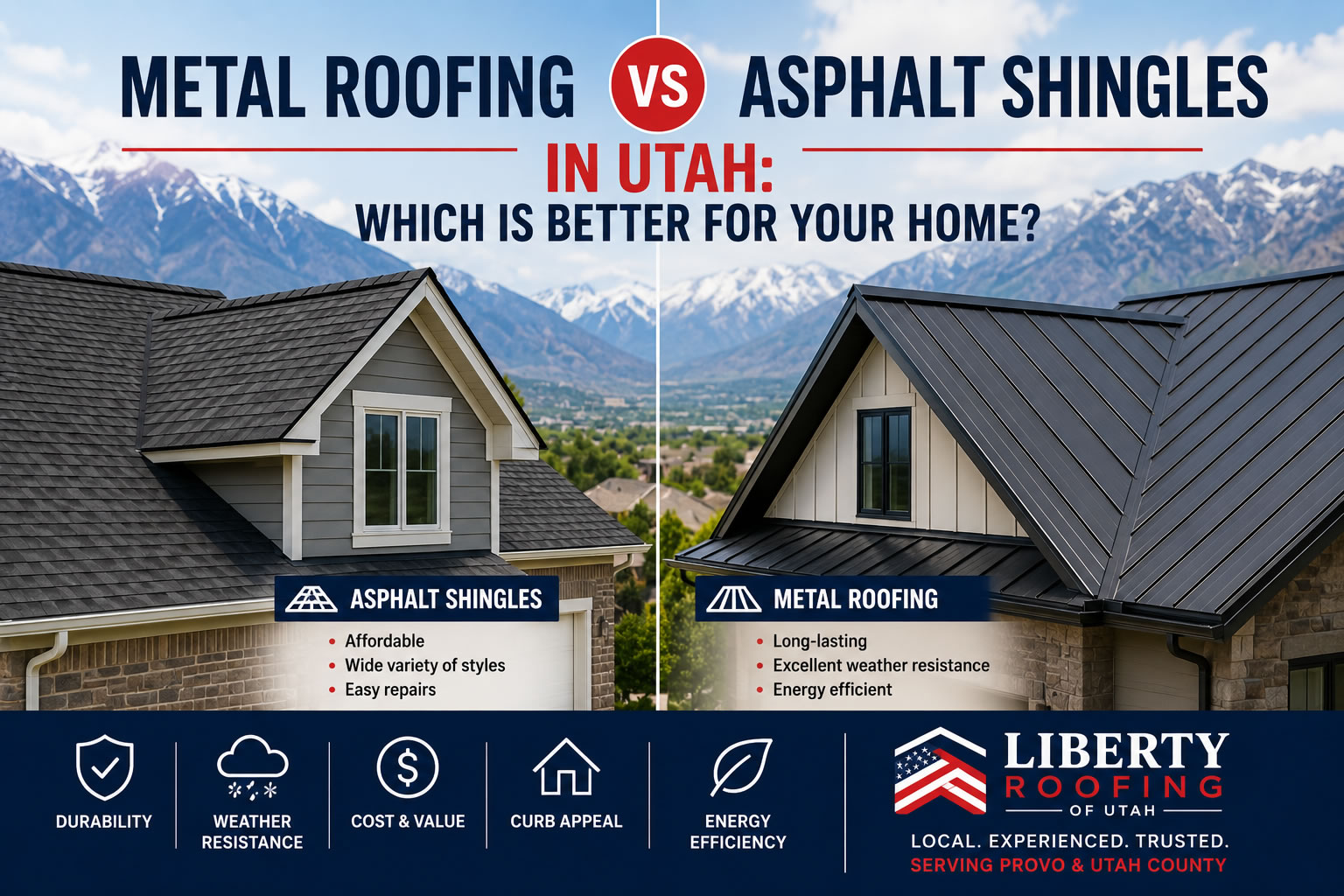
When comparing metal roofing vs asphalt shingles Utah homeowners often want to know which roofing material lasts longer, handles snow better, and provides the best long-term value. Both roofing systems are popular across Provo, Orem, Sandy, Lehi, Spanish Fork, and Utah County, but each option has different strengths depending on your budget, home style, and weather exposure.
For help choosing the right roof for your home, visit Liberty Roofing of Utah’s residential roofing services page.
Asphalt Shingles: Pros and Cons
Asphalt shingles are common on homes in Provo, Orem, Sandy, Lehi, Spanish Fork, and American Fork. They are popular because they are cost-effective and easy to match with many home styles.
Benefits of Asphalt Shingles
- Lower upfront cost than many other roofing materials
- Many color and style options
- Good fit for many residential roofs
- Easier to repair in small areas
- Widely available materials
Possible Downsides of Asphalt Shingles
-
- May not last as long as metal roofing
- Can lose granules over time
- Can be damaged by wind, hail, and poor attic ventilation
- May need more repairs as the roof ages
Metal Roofing: Pros and Cons
Metal roofing can be a strong option for Utah homes. It can handle snow, sun, and wind well when installed correctly. It also gives a home a clean, modern look.
Benefits of Metal Roofing
- Long service life when properly installed
- Good performance in snow and ice
- Strong resistance to cracking and curling
- Can reflect more heat when using the right finish
- Modern appearance with several style choices
Possible Downsides of Metal Roofing
- Higher upfront cost than asphalt shingles
- Requires skilled installation
- Can be louder during rain or hail without proper underlayment
- Repairs may be more complex than shingle repairs
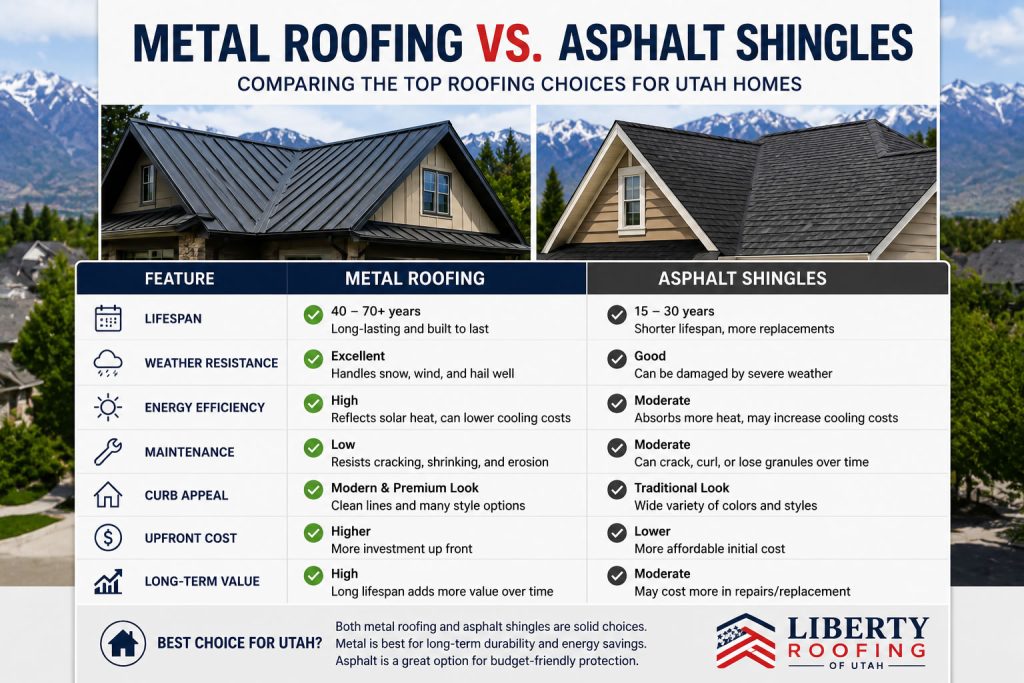
Many homeowners researching metal roofing vs asphalt shingles Utah options are looking for the best balance between cost, appearance, durability, and long-term maintenance. While asphalt shingles remain one of the most common roofing materials in Utah, metal roofing continues to grow in popularity because of its lifespan and weather resistance.
Which Roof Handles Utah Weather Better?
Utah roofs face hot sun, snow, ice, wind, and hail. Metal roofing often does well with snow because snow can slide off more easily. Asphalt shingles can also perform well when they are high quality and installed with proper ventilation, flashing, and underlayment.
Energy.gov explains that cool roofs are designed to reflect more sunlight and absorb less heat. This can help lower roof surface temperatures. You can learn more from Energy.gov’s cool roof guide.
Which Roofing Material Costs Less?
Asphalt shingles usually cost less at the start. That makes them a good choice for many homeowners who want a reliable roof without a higher upfront price. Metal roofing costs more at the start, but it may last longer with proper care.
The best choice is not only about price. It is also about how long you plan to stay in your home, how much maintenance you want, and what type of roof fits your home best.
Which One Should You Choose?
Choose asphalt shingles if you want a trusted, budget-friendly roof with many color options. Choose metal roofing if you want a long-term roofing system and are comfortable with a higher upfront cost.
If you are unsure, Liberty Roofing of Utah can inspect your roof and explain both options. A local roofer can help you compare cost, appearance, roof slope, and weather needs before you make a decision.