

Your roof is one of the most important investments you can make in your home. It protects your family, your belongings, and the structural integrity of your property from Utah’s ever-changing weather. But no roof lasts forever. Whether your home has asphalt shingles, metal roofing, tile, or another roofing material, understanding its expected lifespan can help you plan ahead, avoid unexpected repairs, and protect your investment.
Many homeowners ask, “How long does a roof last in Utah?” The answer depends on several factors, including the roofing material, the quality of the installation, routine maintenance, and Utah’s unique climate. While manufacturers often advertise expected lifespans, real-world conditions such as hailstorms, high winds, intense ultraviolet exposure, snow, and temperature fluctuations can all affect how long your roof performs.
The good news is that regular inspections and preventative maintenance can significantly extend the life of most roofing systems. Knowing what to look for—and when it’s time to repair or replace your roof—can save thousands of dollars over the life of your home.
Key Takeaways
- Roof lifespan varies depending on the roofing material and installation quality.
- Utah’s high elevation and intense UV exposure can accelerate roof aging.
- Annual roof inspections help identify small issues before they become expensive repairs.
- Proper attic ventilation and routine maintenance can add years to your roof’s lifespan.
- Understanding the warning signs of an aging roof allows homeowners to plan for replacement before leaks occur.
What Determines How Long a Roof Lasts?
There isn’t a single answer that applies to every roof. Two neighboring homes with identical roofing materials may experience dramatically different lifespans depending on several important factors.
Quality of Roofing Materials
Higher-quality roofing materials are generally manufactured with thicker construction, better weather resistance, and longer warranties. Premium architectural shingles, for example, typically last much longer than traditional three-tab shingles.
Installation Quality
Even the best roofing materials can fail prematurely if they aren’t installed correctly. Proper fastening, underlayment installation, flashing details, and attic ventilation all play a major role in how well a roof performs over time.
Choosing an experienced roofing contractor helps ensure your roof is installed according to manufacturer specifications and local building codes.
Roof Ventilation
Your attic ventilation system has a direct impact on roof longevity. Poor ventilation allows heat and moisture to build up beneath the roof deck, accelerating shingle deterioration and increasing the risk of mold, wood rot, and ice dam formation during winter.
Weather Exposure
Every roof experiences years of exposure to:
- Sunlight
- Wind
- Rain
- Snow
- Hail
- Temperature fluctuations
Over time, these weather conditions naturally wear down roofing materials. The more extreme the environment, the more important regular maintenance becomes.
Routine Maintenance
Simple maintenance tasks—such as replacing damaged shingles, cleaning gutters, sealing flashing, and scheduling annual inspections—can significantly extend the useful life of your roof.
How Utah’s Climate Affects Roof Lifespan
Utah presents unique challenges for residential roofing systems. Homeowners experience weather conditions that many other parts of the country never see, requiring roofing materials to withstand significant seasonal extremes.
Intense UV Exposure
Because much of Utah sits at a higher elevation, roofing materials receive stronger ultraviolet radiation than homes located closer to sea level. UV exposure gradually dries out asphalt shingles, causing them to become brittle and lose their protective granules over time.
Summer Heat
Roof surface temperatures can easily exceed 150 degrees during Utah’s hottest summer days. Repeated heating and cooling cycles cause roofing materials to expand and contract, gradually weakening seals and flashing.
Hailstorms
Summer thunderstorms frequently produce hail that can bruise shingles, damage flashing, dent roof vents, and reduce the lifespan of otherwise healthy roofing systems.
Winter Snow and Ice
Heavy snowfall places additional weight on roofing structures, while repeated freeze-thaw cycles can force water into tiny cracks that expand over time. Proper drainage and attic ventilation are critical during Utah winters.
Strong Winds
Seasonal windstorms can lift shingles, loosen ridge caps, and damage flashing even if shingles aren’t completely blown off the roof.
These combined weather conditions make routine inspections especially valuable for Utah homeowners.
Average Roof Lifespans by Roofing Material
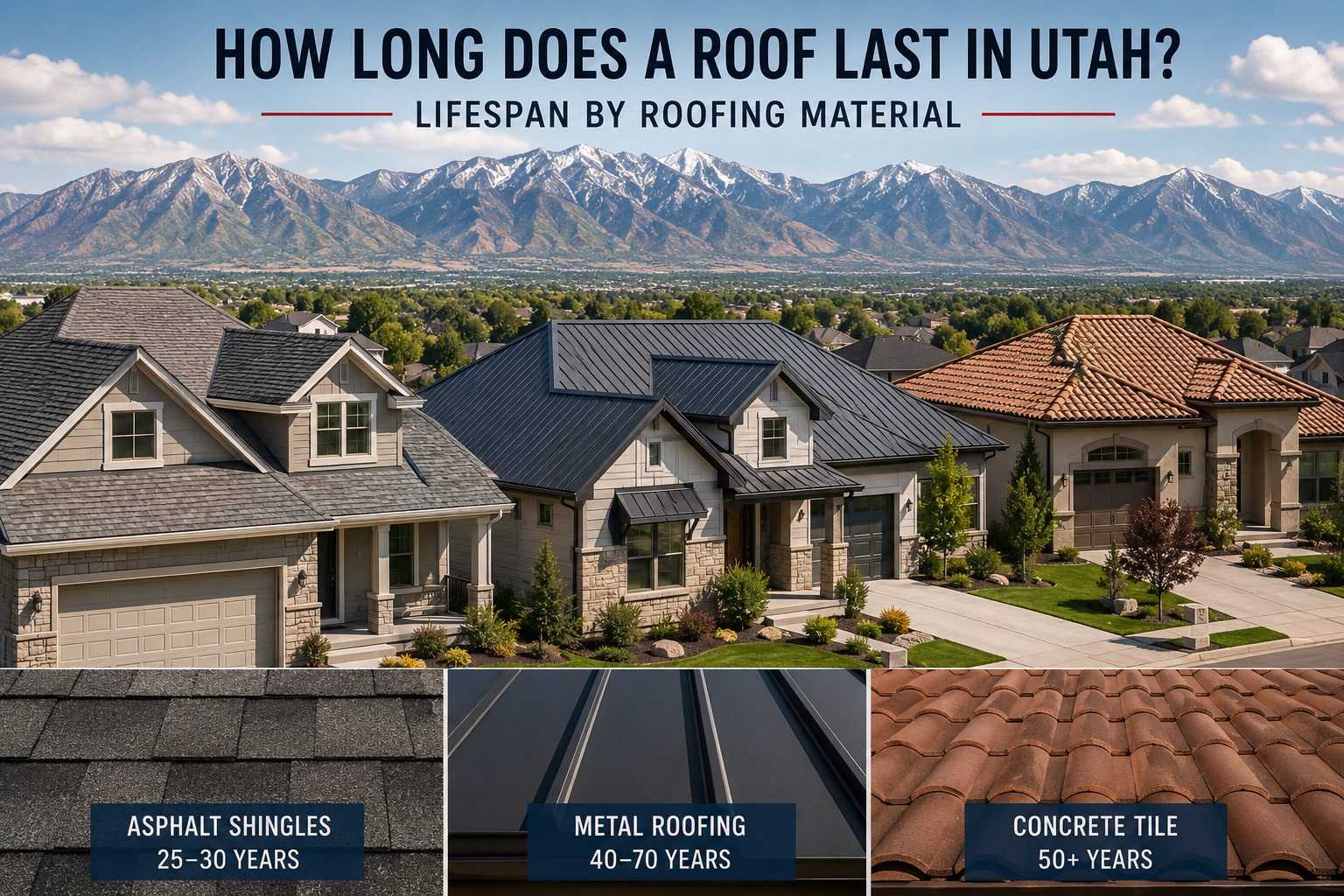
Although every home is different, the following estimates provide a general idea of how long common residential roofing materials typically last when properly installed and maintained.
| Roofing Material | Average Lifespan in Utah |
|---|---|
| 3-Tab Asphalt Shingles | 15–20 Years |
| Architectural Asphalt Shingles | 25–30 Years |
| Premium Asphalt Shingles | 30–40 Years |
| Standing Seam Metal Roofing | 40–70 Years |
| Concrete Tile Roofing | 50+ Years |
| Clay Tile Roofing | 50–100 Years |
| Natural Slate Roofing | 75–100+ Years |
While these figures provide a helpful guideline, routine maintenance and weather conditions ultimately determine how long an individual roof will perform.
10 Signs Your Roof May Be Nearing the End of Its Life
Roofs rarely fail overnight. In most cases, they provide warning signs months—or even years—before major problems develop. Recognizing these symptoms early allows homeowners to schedule repairs or plan for replacement before unexpected leaks or structural damage occur.
1. Curling or Buckling Shingles
As asphalt shingles age, they may begin curling at the edges or buckling in the center. This often indicates years of exposure to intense sunlight, temperature fluctuations, or moisture. Curled shingles are more vulnerable to wind damage and water infiltration.
2. Missing Shingles
Strong Utah winds and severe storms can loosen or completely remove shingles. Even one missing shingle exposes the underlayment and roof decking to moisture, increasing the likelihood of leaks.
3. Excessive Granule Loss
If you notice large amounts of dark, sand-like granules collecting in your gutters or near your downspouts, your shingles may be reaching the end of their useful life. These granules protect the asphalt from harmful UV rays, and once they’re gone, deterioration accelerates.
4. Cracked or Split Shingles
Years of expansion and contraction caused by Utah’s changing temperatures can eventually cause shingles to crack. These openings allow moisture to penetrate beneath the roofing materials.
5. Frequent Roof Repairs
If you find yourself repairing different sections of your roof every year, it may be more cost-effective to consider a replacement. Continually repairing an aging roof often costs more over time than investing in a new roofing system.
6. Water Stains on Ceilings or Walls
Brown stains, peeling paint, or damp drywall are often signs that water has already entered the roofing system. While the leak may appear inside one room, the actual source could be several feet away on the roof.
7. Sagging Roof Areas
A sagging roofline may indicate structural deterioration, water-damaged decking, or long-term moisture intrusion. This is one of the most serious warning signs and should be evaluated immediately by a professional.
8. Damaged Flashing
Flashing around chimneys, skylights, plumbing vents, and roof valleys prevents water from entering vulnerable areas. If flashing becomes loose, rusted, or cracked, leaks can develop even if the shingles remain in good condition.
9. Visible Daylight in the Attic
If you can see sunlight entering through the roof boards while standing in your attic, water can likely enter through those same openings during rain or snow.
10. Your Roof Is Simply Getting Old
Even a roof that appears to be in good condition should be monitored closely as it approaches the end of its expected lifespan. Age alone doesn’t necessarily mean replacement is required, but annual inspections become increasingly important.
Can You Extend the Life of Your Roof?
Absolutely. While every roofing system eventually reaches the end of its service life, proper maintenance can often add several years of performance.
Homeowners who invest in preventative maintenance typically experience fewer emergency repairs and maximize the value of their roofing investment.
Schedule Annual Roof Inspections
A professional inspection can identify loose shingles, damaged flashing, worn sealants, and other small issues before they become expensive problems.
Keep Gutters Clean
Clogged gutters prevent water from draining properly and can force moisture beneath roofing materials. Cleaning gutters at least twice a year helps protect both the roof and your home’s foundation.
Trim Overhanging Tree Branches
Tree limbs rubbing against shingles gradually wear away protective granules and increase the risk of storm damage. Trimming branches also reduces the amount of leaves and debris accumulating on the roof.
Replace Damaged Shingles Promptly
Waiting to replace missing or damaged shingles allows water to reach the underlayment and roof decking. Small repairs completed quickly often prevent much larger repairs later.
Maintain Proper Attic Ventilation
A well-ventilated attic helps regulate temperature and moisture levels throughout the year, reducing stress on roofing materials and improving energy efficiency.
Simple Roof Maintenance Checklist
Following a few simple maintenance practices each year can help maximize the lifespan of your roof.
- Inspect your roof after major storms.
- Look for missing or damaged shingles from the ground.
- Clean gutters and downspouts every spring and fall.
- Remove leaves and debris from roof valleys.
- Check attic spaces for moisture or daylight.
- Trim back tree branches that contact the roof.
- Schedule a professional roof inspection annually.
Preventative maintenance is almost always less expensive than repairing extensive storm or water damage.
Common Mistakes That Shorten Roof Lifespan
Many roofs fail earlier than expected because small issues are ignored or maintenance is delayed.
Some of the most common mistakes homeowners make include:
- Ignoring small leaks.
- Waiting until shingles blow off before calling a roofer.
- Neglecting attic ventilation problems.
- Allowing gutters to remain clogged.
- Walking on the roof unnecessarily.
- Hiring inexperienced or unlicensed roofing contractors.
- Postponing inspections after hailstorms or high winds.
A proactive approach to roof maintenance can significantly extend the life of your roofing system while reducing long-term ownership costs.
Should You Repair or Replace Your Roof?
One of the most common questions homeowners ask is whether it’s better to repair an aging roof or invest in a complete replacement. The answer depends on several factors, including the age of the roof, the extent of the damage, and the overall condition of the roofing system.
In many situations, a professional repair can safely extend the life of your roof for several years. However, if your roof is approaching the end of its expected lifespan and repairs are becoming more frequent, replacing the roof may provide greater long-term value.
Roof Repair May Be the Better Choice If:
- The damage is isolated to a small area.
- Your roof is relatively new.
- The flashing or a few shingles require replacement.
- The roof structure remains in excellent condition.
- There have been no recurring leaks.
A Roof Replacement May Be the Better Investment If:
- Your roof has reached or exceeded its expected lifespan.
- Storm damage affects multiple sections of the roof.
- Repairs are becoming more frequent each year.
- There are multiple active leaks.
- The roof decking has sustained water damage.
- The cost of repairs approaches the value of a replacement.
An experienced roofing contractor can evaluate your roof and explain whether repairs or replacement make the most financial sense based on its overall condition.
How a Professional Roof Inspection Helps
Many roofing problems develop gradually and remain hidden until significant damage has already occurred. That’s why regular roof inspections are one of the smartest investments homeowners can make.
During a professional inspection, an experienced roofing contractor evaluates every major component of your roofing system, including:
- Roofing materials and overall condition
- Shingle wear and granule loss
- Flashing around chimneys, skylights, and roof penetrations
- Roof valleys and drainage areas
- Ventilation components
- Signs of hail or wind damage
- Gutters and downspouts
- Visible signs of moisture intrusion
Professional inspections provide homeowners with valuable information about the current condition of their roof and help prioritize maintenance before expensive repairs become necessary.
Plan Ahead Instead of Waiting for a Leak
One of the biggest advantages of understanding your roof’s expected lifespan is the ability to plan ahead. Waiting until water begins entering your home often results in emergency repairs, unexpected expenses, and potential damage to drywall, insulation, flooring, and personal belongings.
By monitoring your roof’s age, scheduling routine inspections, and addressing small issues promptly, you can often extend the life of your roof while avoiding unnecessary surprises.
Whether your roof is 10 years old or approaching 30 years, understanding its condition today allows you to make informed decisions for tomorrow.
Related Roofing Resources
Continue learning about protecting your home’s roofing system with these helpful resources from Liberty Roofing Utah:
- Residential Roofing Services – Learn about our complete residential roofing solutions, from inspections and repairs to full roof replacements.
- Roof Repair Services – Discover how timely repairs can extend the life of your roof and prevent costly damage.
- Roof Replacement Services – Learn when replacing your roof becomes the smarter long-term investment.
- Schedule a Roof Inspection – Contact Liberty Roofing Utah to request a professional inspection or free estimate.
Not Sure How Much Life Your Roof Has Left?
Your roof protects everything underneath it, but it won’t last forever. Whether your roof is showing signs of age or you simply want peace of mind, a professional inspection can help you understand its condition and identify any issues before they become costly repairs.
At Liberty Roofing Utah, we provide honest recommendations based on the condition of your roof—not high-pressure sales tactics. Our experienced team is committed to helping homeowners make informed decisions that protect their homes and their budgets.
Frequently Asked Questions
How long do asphalt shingles typically last in Utah?
Architectural asphalt shingles generally last between 25 and 30 years in Utah when properly installed and maintained. Premium shingles may last even longer depending on weather conditions and routine maintenance.
Does Utah’s climate shorten the lifespan of a roof?
Utah’s high elevation, intense UV exposure, hailstorms, heavy snow, and temperature swings can all contribute to faster roof aging compared to milder climates. Regular maintenance helps offset these effects.
How often should I have my roof inspected?
Most homeowners should schedule a professional roof inspection once each year and after any major hailstorm or severe wind event.
Can regular maintenance really extend my roof’s lifespan?
Yes. Replacing damaged shingles, maintaining flashing, cleaning gutters, and addressing small issues promptly can often add several years to the life of a roofing system.
When should I replace my roof instead of repairing it?
If your roof is nearing the end of its expected lifespan, has widespread storm damage, or requires frequent repairs, replacement may provide better long-term value than continued repairs.
How can I determine how much life my roof has left?
A professional roof inspection is the most reliable way to evaluate the remaining life of your roof. An experienced contractor can identify wear, storm damage, and other factors that influence its expected lifespan.
Which Roofing Material Is Best for Homes in Utah?
Choosing the right roofing material isn’t just about appearance—it’s about finding a roofing system that can withstand Utah’s unique climate while fitting your budget and long-term goals. Every material has advantages and disadvantages, and the best choice depends on your home’s location, architectural style, and how long you plan to stay in the home.
Architectural Asphalt Shingles
Architectural shingles remain the most popular roofing material throughout Provo, Orem, Lehi, American Fork, Spanish Fork, Sandy, and surrounding communities. They offer an excellent balance of affordability, durability, and curb appeal.
Modern architectural shingles are designed to resist wind, heavy rain, and moderate hail while providing a lifespan of 25 to 30 years when properly installed and maintained. Because replacement materials are widely available, repairs are often more affordable than with specialty roofing products.
Metal Roofing
Metal roofing has grown in popularity among Utah homeowners because of its exceptional longevity and energy efficiency. Standing seam metal roofs can last 40 to 70 years and perform extremely well in areas that receive heavy snowfall.
Metal roofs also reflect more solar heat than traditional asphalt shingles, helping improve energy efficiency during Utah’s hot summers. While the initial investment is higher, many homeowners appreciate the long-term value and minimal maintenance requirements.
Concrete and Clay Tile
Concrete and clay tile roofs are known for their outstanding durability and distinctive appearance. These roofing systems often last 50 years or more and perform well in Utah’s dry climate.
However, tile roofs require a structure capable of supporting the additional weight, making professional evaluation important before installation.
Premium Roofing Systems
For homeowners planning to stay in their homes for decades, premium roofing materials may provide the best long-term value. Although they require a larger upfront investment, their extended lifespan and reduced maintenance needs often offset the initial cost over time.
Why Annual Roof Inspections Protect Your Investment
Regardless of the roofing material you choose, regular inspections remain one of the most effective ways to maximize its lifespan. Small issues such as cracked sealant, damaged flashing, lifted shingles, or clogged drainage systems can often be corrected before they lead to expensive structural damage.
Professional inspections become even more valuable after severe weather events. Utah’s summer hailstorms and winter snow can create hidden damage that may not become visible until months later.
By identifying these problems early, homeowners can often avoid emergency repairs while extending the life of their existing roof by several years.
Not Sure How Much Life Your Roof Has Left?
Every roof eventually reaches the end of its lifespan, but waiting until you discover a leak can lead to expensive repairs and unnecessary stress. Whether your roof is 15 years old or more than 30, a professional inspection can help determine its condition and whether maintenance, repairs, or replacement is the right solution.
Liberty Roofing Utah proudly serves homeowners throughout Provo, Orem, Lehi, American Fork, Spanish Fork, Sandy, and surrounding communities. Our experienced team provides honest inspections and expert recommendations so you can make informed decisions about your roof.