

Why Liberty Roofing Uses 60-Mil TPO on Certain Utah Roofs: Lessons From Four Recent Projects
60 mil TPO roofing in Utah is not a theoretical product category for Liberty Roofing. Our crews have installed it on very different real-world projects: a fire-damaged commercial building in Orem, an insurance company’s leaking commercial roof in Pleasant Grove, a complete residential tear-off and rebuild in Pleasant Grove, and a nearly $10 million custom home near Park City that combined bronze TPO with standing seam metal roofing.
This article looks at what Liberty has learned from its own recent projects and why 60-mil TPO has been part of the solution on several very different Utah roofs.
What “60 Mil TPO” Means in Liberty Roofing’s Project Portfolio
TPO stands for thermoplastic polyolefin. It is a single-ply membrane commonly used on low-slope roofing areas. “60 mil” refers to the nominal membrane thickness: 60 thousandths of an inch.
The important point for a building owner is that membrane thickness does not describe the entire roofing system. A completed TPO project can also involve tear-off, decking replacement, insulation or cover boards, attachment methods, heat-welded seams, drains, flashing, rooftop equipment, edge details, and transitions to other roofing materials.
That distinction is visible throughout Liberty’s project portfolio. On one job, the major challenge was structural metal deck replacement after a fire. On another, years of recurring leaks drove a complete commercial replacement. On a residential project, several layers of old roofing came off before new wood decking went down. On a luxury new-construction home, bronze TPO was used only on the low-slope portions while standing seam metal completed other roof areas.
For manufacturer background, Versico describes its TPO membrane systems as heat-weldable, UV- and heat-resistant membranes available in multiple thicknesses and colors. Liberty’s own work shows how those membranes are used in actual Utah projects.
Project 1: Orem Fire Damage Required More Than a New Membrane
One of Liberty Roofing’s most substantial recent commercial projects was a fire-damaged building in Orem. The fire affected both the existing roofing system and significant portions of the structural metal roof decking.
That meant Liberty could not simply cover the damaged roof with a new membrane. Large sections of compromised metal decking had to be removed and replaced first. Only after the structural roof deck was restored could the new roofing system be installed.
Liberty then installed a new Versico 60 mil TPO membrane across the commercial building.
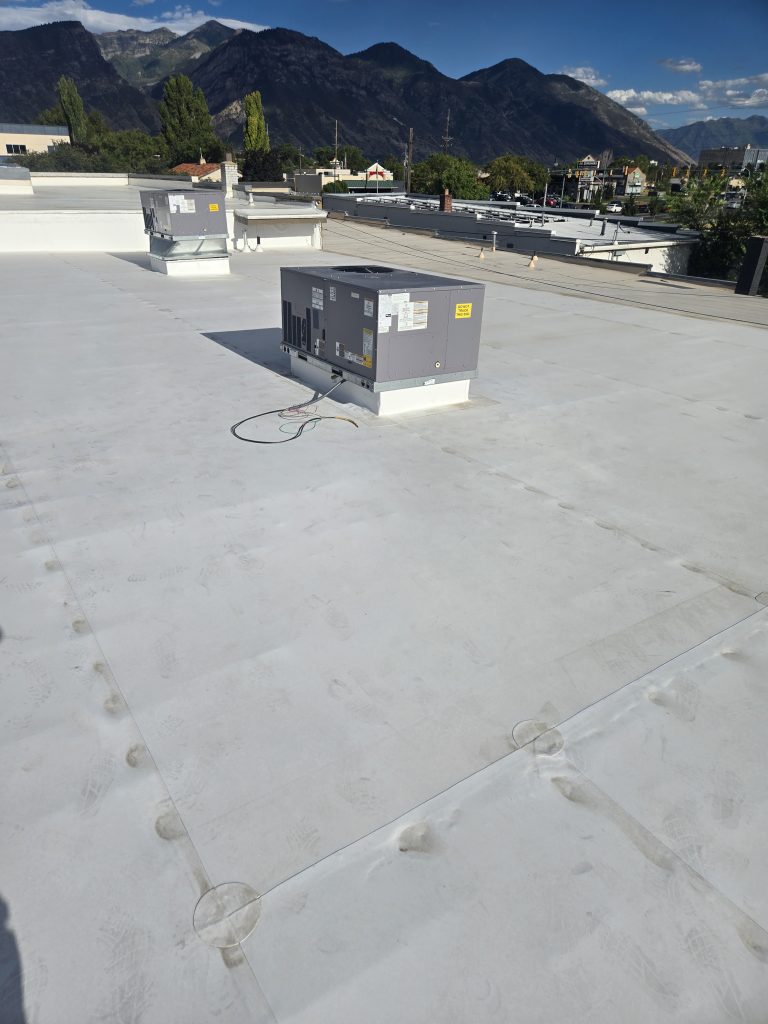
This project is a strong example of why Liberty evaluates what is underneath the membrane. The most visible finished material is the white TPO surface, but the success of the project depended on correcting the damaged structural base first.
See the complete Orem fire-damaged commercial roof restoration case study for the project sequence and original photographs.
Lesson From Orem: TPO Cannot Compensate for a Damaged Roof Structure
A new membrane needs a suitable substrate. That sounds obvious, but it is one of the most important lessons from Liberty’s Orem project.
When fire, prolonged moisture, impact, or other conditions damage structural roof decking, the repair scope has to address those conditions before the finished roofing system goes down. A membrane may provide waterproofing, but it is not a substitute for sound decking or structural components.
This is one reason Liberty’s commercial roof inspections look beyond surface appearance. If the project requires deck replacement, that work becomes part of the roofing plan rather than an afterthought.
Project 2: Pleasant Grove Insurance Company—Replacing a Roof After Years of Leaks
Another recent Liberty Roofing project involved a commercial building in Pleasant Grove occupied by an insurance company. The client had dealt with roof leaks for years and had become frustrated enough that rain itself had become a source of concern. They worried about the ceiling whenever wet weather arrived.
Liberty removed the old TPO roof covering and installed a new Versico 60-mil TPO membrane. The project included work around a long skylight, rooftop equipment, pipes, supports, and perimeter walls.
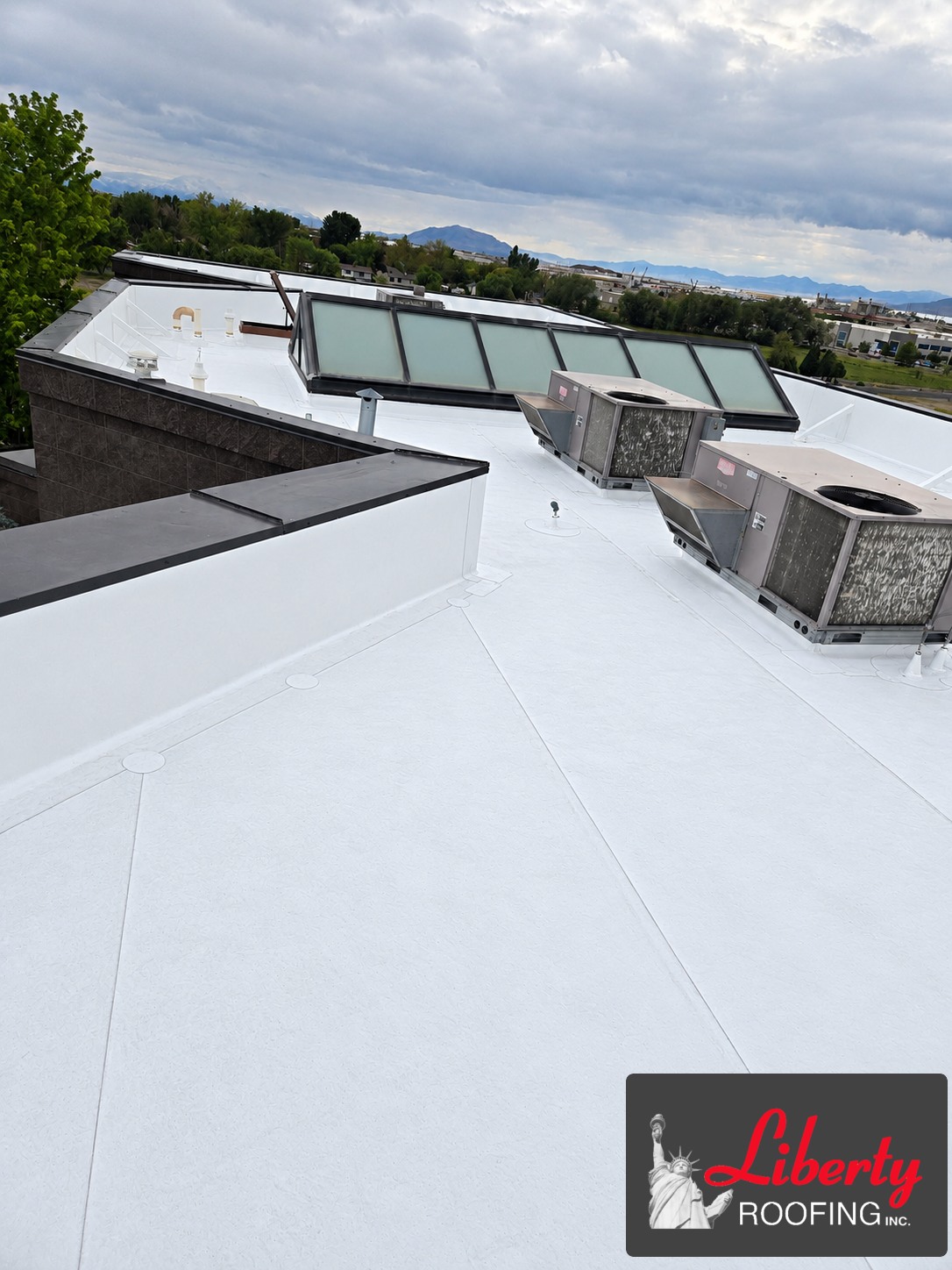
The biggest outcome for this client was not simply a new white roof surface. It was relief from the recurring worry that accompanied every rainstorm.
The complete Pleasant Grove commercial roof replacement case study documents the old membrane removal and the new roofing around the building’s existing features.
Lesson From Pleasant Grove: Details Around Equipment and Penetrations Matter
Commercial roofs are rarely uninterrupted rectangles. Skylights, HVAC equipment, pipes, supports, curbs, walls, drains, and edge conditions all break up the field of the roof.
Liberty’s Pleasant Grove project demonstrates why the quality of the details matters alongside the membrane itself. Removing the old roofing exposed the areas around pipes, perimeter supports, and the skylight. Those same areas had to be incorporated into the finished TPO system.
When building owners compare TPO proposals, Liberty recommends looking beyond membrane thickness alone. The scope should make clear how existing rooftop features, perimeter conditions, drainage, and transitions will be handled.
Project 3: Pleasant Grove Residential Tear-Off, New Decking, and TPO
TPO is often associated with commercial buildings, but Liberty’s portfolio also includes residential low-slope applications. A recent Pleasant Grove project for homeowner Scott involved a complete replacement that went much deeper than the finished membrane.
Liberty removed several layers of old roofing, exposed the original roof surface, installed new wood roof decking, prepared the roof assembly, and installed a new white TPO membrane.

The project also had a personal dimension. Scott is blind and shared that he had been taken advantage of previously. Finding a contractor he felt he could trust was especially meaningful to him. That experience is part of why Liberty documents not only the finished roof but also the work beneath it.
See the full Pleasant Grove TPO roof replacement case study.
Lesson From Scott’s Roof: A Complete Replacement May Start Below the Membrane
Scott’s project is another reminder that the membrane is the last visible stage of a larger construction sequence. Several layers of old roofing had to come off. New decking then created the base for the new assembly.
For a property owner comparing estimates, this is why the tear-off and substrate portions of the scope deserve careful attention. Two proposals can both say “TPO roof replacement” while describing very different amounts of underlying work.
Liberty wants customers to understand whether the project includes only membrane work or whether decking, insulation, perimeter walls, drains, or other components are also part of the replacement.
Project 4: GAF Bronze 60 Mil TPO on a Nearly $10 Million Park City-Area Home
Liberty’s TPO work is not limited to white commercial membranes. On a luxury new-construction home inside the Tuhaye by Talisker community near Park City, Liberty installed GAF bronze 60 mil TPO on the low-slope roof areas.
The nearly $10 million custom home uses a mixed roofing design. Bronze TPO covers low-slope portions, while standing seam metal panels complete other parts of the roof.
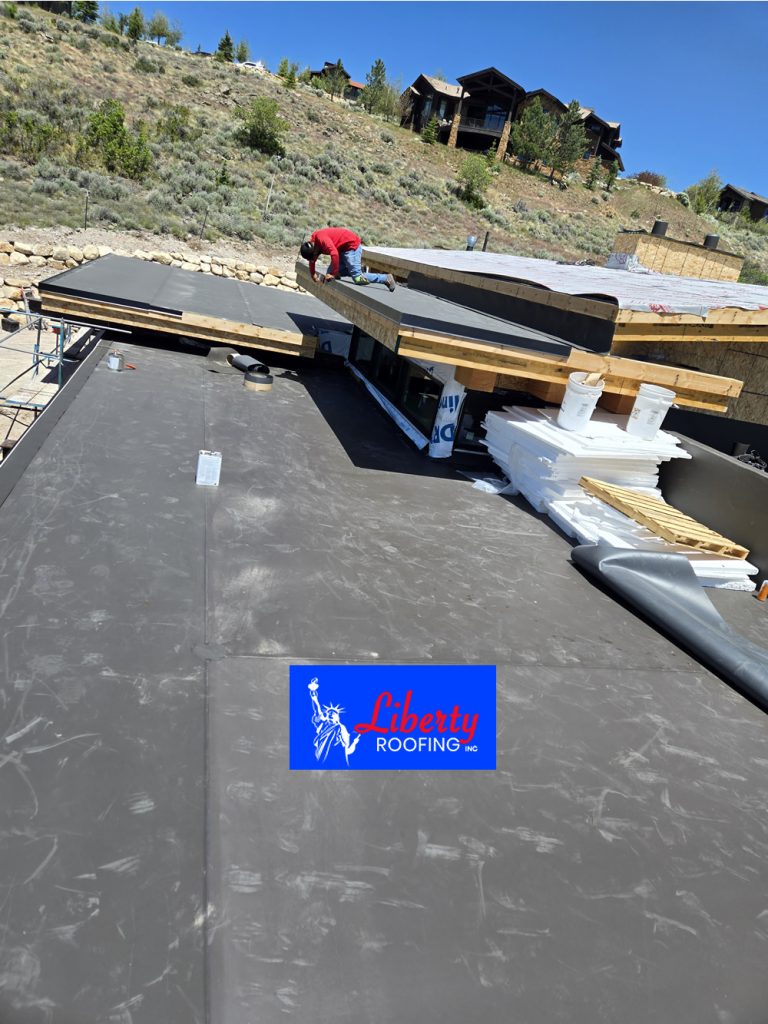
Here, the color and roof design were part of the project. Instead of treating the low-slope roof as an isolated white surface, the bronze membrane supports the architectural appearance of the home and works alongside standing seam metal roofing.
GAF’s current EverGuard TPO data sheet includes 60-mil membrane specifications. Liberty’s Park City project shows what a 60-mil TPO product can look like when it is part of a high-end residential design.
See the full Park City GAF bronze TPO case study.
American Fork Provides Another Example of TPO Used With Metal and Shingles
A recent Liberty Roofing new-construction project in American Fork provides another real example of a mixed roofing system. The large home included 26 gauge standing seam metal roofing, gray shingle slopes, and smaller areas of TPO membrane.
One of Liberty’s project photographs shows a TPO section with a roof drain, perimeter edge, and adjacent shingle roofing. It is a useful reminder that smaller low-slope sections still require proper membrane detailing and drainage even when most of the visible roof uses other materials.
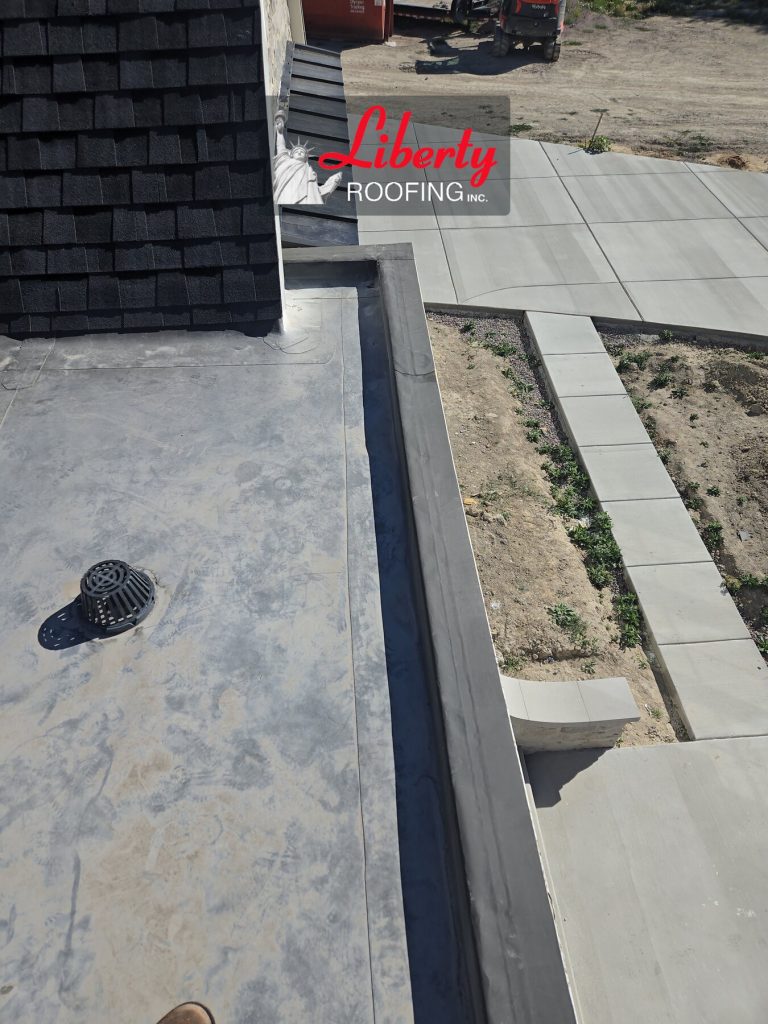
See the American Fork standing seam metal and TPO case study for the complete set of original project photographs.
What These Liberty Roofing Projects Have in Common
The buildings are very different, but several patterns appear across Liberty’s recent TPO work.
- The substrate matters. Orem required structural metal deck replacement. Scott’s Pleasant Grove roof required new wood decking.
- Details matter. The insurance-company roof included a skylight, pipes, supports, rooftop equipment, and perimeter conditions that had to be incorporated into the new system.
- Drainage matters. Low-slope membrane sections need a clear path for water, whether the roof is a commercial building or a small TPO area on a custom home.
- TPO can be one part of a mixed system. Park City and American Fork both combine membrane roofing with other roof materials.
- Project scope matters as much as material name. “60 mil TPO” does not tell you whether a project also includes tear-off, deck replacement, insulation, edge work, drains, or complex penetrations.
Questions Liberty Recommends Asking About a TPO Proposal
If you are comparing TPO roofing proposals, ask more than “How many mils is the membrane?” Liberty recommends understanding:
- What existing roofing will be removed?
- What happens if damaged decking is discovered?
- Which TPO manufacturer and membrane are being proposed?
- How will the membrane be attached?
- How will seams be welded and checked?
- How will drains, scuppers, pipes, curbs, skylights, and rooftop equipment be detailed?
- What perimeter and edge work is included?
- How does the TPO section transition to shingles, metal, walls, or other roof areas?
- What warranty applies to the finished system?
- Which parts of the scope are allowances versus confirmed work?
Those questions make it easier to compare complete roofing systems rather than comparing a single membrane specification.
Liberty Roofing’s TPO Experience Across Utah
Liberty Roofing’s recent work spans commercial restoration, commercial replacement, residential replacement, and high-end new construction. The projects above include Orem, Pleasant Grove, Park City-area Tuhaye, and American Fork.
That experience gives Liberty a broad base for evaluating low-slope roofing conditions in Provo, Orem, Lehi, American Fork, Spanish Fork, Sandy, and surrounding Utah communities.
Learn more about Liberty Roofing’s TPO roofing services and commercial roofing services in Utah Valley.
Frequently Asked Questions About Liberty Roofing’s TPO Projects
Does Liberty Roofing install 60 mil TPO on both commercial and residential roofs?
Yes. Liberty’s recent portfolio includes Versico 60 mil TPO on commercial buildings and GAF bronze 60 mil TPO on a luxury residential new-construction project. Liberty has also installed TPO on residential low-slope areas in Pleasant Grove and American Fork.
Does a new TPO roof always require new decking?
No. Decking replacement depends on the condition and scope of the individual project. Liberty’s Orem fire-damage project required extensive structural metal deck replacement, while Scott’s Pleasant Grove replacement included new wood decking after several old roofing layers were removed.
Why did Liberty use bronze TPO near Park City?
The Tuhaye custom home used GAF bronze 60 mil TPO on low-slope areas as part of a mixed roof design that also includes standing seam metal. The bronze membrane supports the home’s architectural appearance while serving the low-slope roof sections.
Can TPO be installed next to metal or shingle roofing?
Yes, when the roof design and transition details are appropriate. Liberty’s Park City and American Fork projects both include TPO alongside other roofing materials.
Is 60 mil TPO only for new construction?
No. Liberty has used 60 mil TPO in new construction, complete replacement, and fire-damage restoration projects.
How do I know whether TPO is appropriate for my roof?
The roof should be evaluated based on slope, condition, substrate, drainage, penetrations, building use, and project goals. Liberty Roofing can inspect the property and explain whether TPO or another roofing system fits the specific roof.
Related Liberty Roofing TPO Projects
Considering TPO for a Utah Commercial or Low-Slope Roof?
Liberty Roofing can evaluate the existing roof, explain what work is needed beneath and around the membrane, and recommend a system based on the actual building—not a generic material pitch. Our recent TPO work includes commercial, residential, restoration, and luxury new-construction projects across Utah.