

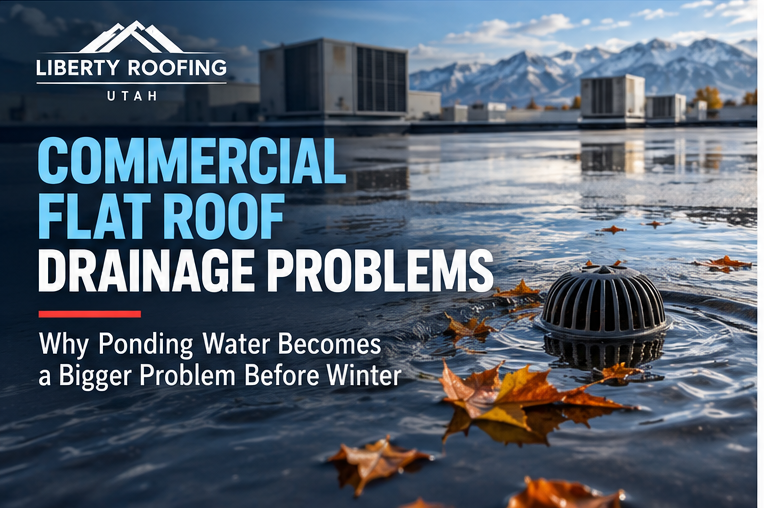
Commercial Flat Roof Drainage Problems: Why Ponding Water Becomes a Bigger Problem Before Winter
Commercial flat and low-slope roofs depend on more than the roofing membrane to keep a building dry. They also depend on a properly functioning drainage system. When drains, scuppers, gutters, or low areas cannot move water off the roof efficiently, standing water can remain on the membrane and expose weak points for longer periods of time.
That makes fall an important time for Utah building owners and property managers to review commercial roof drainage. Leaves, windblown debris, sediment, and neglected drains can create problems just as winter precipitation and freeze-thaw cycles begin placing additional demands on the roofing system.
Carlisle SynTec, a major commercial roofing manufacturer, specifically recommends fall drainage maintenance because clogged drains can contribute to ponding water, membrane stress, edge concerns, and additional structural load. Review Carlisle’s fall drainage guidance.
Key Takeaways
- Commercial roofs need clear, functional drainage before winter.
- Ponding water can increase exposure around seams, penetrations, edges, and other details.
- Blocked drains add unnecessary water weight to the roof structure.
- Freeze-thaw cycles can worsen existing cracks, openings, and drainage deficiencies.
- Fall inspection and maintenance can identify problems before winter storms arrive.
Why Commercial Flat Roof Drainage Matters
A low-slope roof is designed to direct water toward drains, scuppers, gutters, or other outlets. Although the surface may look flat from the ground, properly designed commercial roofs incorporate slope so water can move toward designated drainage points.
When that system works correctly, rainfall and melting snow leave the roof efficiently. When it does not, water can remain in low spots for extended periods. That condition is commonly described as ponding water.
Ponding does not automatically mean the membrane has failed, but persistent standing water is a warning sign that should be evaluated. It can indicate blocked drainage, settlement, insulation compression, structural deflection, or an original slope problem.
What Causes Ponding Water on Commercial Roofs?
Blocked Roof Drains
Leaves, trash, roofing debris, sediment, and vegetation can collect around roof drains. Even when a drain is not completely blocked, restricted flow can cause water to back up during heavier precipitation.
Clogged Scuppers and Gutters
Perimeter drainage components can collect the same debris as internal drains. Gutters that appear clear from ground level may still contain blockages near outlets or downspouts.
Compressed or Deteriorated Insulation
Roof insulation can become compressed because of repeated foot traffic, equipment loads, moisture, or age. That may create localized depressions where water collects.
Structural Deflection
Roof framing can deflect for a variety of reasons. A low area may hold more water, and that additional water weight can increase the load on the same area. Structural concerns require appropriate professional evaluation.
Improper Original Slope
Some roofs were never designed or installed with sufficient positive drainage. Correcting these conditions may require tapered insulation, additional drains, or broader reroofing work.
Why Ponding Water Can Become More Concerning Before Winter
Fall and winter add several variables to an existing drainage problem. First, autumn leaves can rapidly clog drain baskets and scuppers. Then rain or melting snow may remain on the roof longer than intended.
As temperatures move above and below freezing, trapped water can freeze and thaw repeatedly. Ice may also temporarily obstruct drainage pathways. These cycles can expose existing seams, flashing transitions, penetrations, and edge details to repeated moisture and temperature stress.
Snow accumulation adds another consideration: weight. Snow already places load on a roof structure, and standing water in low areas adds more. That does not mean every ponding condition is structurally dangerous, but unexplained or increasing ponding should not be ignored.
How Ponding Water Affects TPO Roofing Systems
TPO is one of the most common single-ply membranes used on commercial buildings because of its durability, reflective surface, and heat-welded seams. Like any roofing system, however, it performs best when water is directed off the roof as intended.
Persistent ponding keeps water in contact with membrane details for extended periods. Areas around penetrations, curbs, seams, patches, and drains deserve close inspection when water repeatedly collects nearby.
Heat-welded TPO seams are designed to provide durable waterproof connections, but commercial roofs include far more than field seams. Drain assemblies, rooftop equipment, edge metal, pipe penetrations, and previous repair areas all need to remain properly detailed.
Liberty Roofing Utah has completed major commercial TPO roofing and structural restoration projects, including work involving extensive deck repairs and 60 mil TPO membrane installation.
7 Warning Signs of a Commercial Roof Drainage Problem
- Water remains on the roof long after precipitation ends. Persistent standing water indicates the drainage path should be evaluated.
- Debris is collecting around drains or scuppers. Organic matter and sediment can reduce flow and hide drain openings.
- Water stains appear on exterior walls. Overflowing gutters or scuppers can leave visible staining below roof edges.
- Interior leaks appear near low roof areas. The visible interior leak may not be directly below the roof entry point, but repeated ponding nearby deserves investigation.
- Membrane shows wrinkling, displacement, or previous patching. These areas should be reviewed carefully when water accumulates around them.
- Drains are slow during rainfall. Restricted flow can allow water to spread across larger areas of the roof.
- Ponding areas are getting larger. A change over time can indicate insulation, deck, or structural conditions that require evaluation.
What Should a Fall Commercial Roof Inspection Include?
A useful pre-winter inspection should evaluate both the membrane and drainage system. The scope will vary by roof, but common items include:
- Roof drains, drain baskets, and strainers
- Scuppers, gutters, and downspouts
- Low areas and evidence of persistent ponding
- TPO or other membrane seams
- Flashing around curbs and rooftop equipment
- Pipe penetrations and pitch pockets
- Perimeter edge metal
- Previous repair locations
- Visible membrane punctures or cuts
- Roof access paths and areas with frequent foot traffic
Documentation is useful for commercial property owners because it creates a condition record and helps maintenance teams compare changes from one inspection to the next.
Do Not Let Maintenance Crews Damage the Membrane
Commercial roofs often support HVAC equipment, vents, communications systems, and other building components. That means technicians may walk across the roof throughout the year.
Fall HVAC service is a good time to remind vendors to use designated walk paths where provided and avoid dropping tools, dragging panels, or placing sharp objects directly on the membrane. Small punctures can be difficult to see but may become leaks later.
If new equipment is installed, roofing details around curbs and penetrations should be completed correctly rather than relying on temporary sealant as a long-term solution.
Can Ponding Water Be Fixed Without Replacing the Whole Roof?
Often, yes. The correct solution depends on the cause. A clogged drain may only need proper cleaning. A damaged drain assembly or flashing detail may be repairable. Localized low areas might be addressed during repair work.
More extensive slope, insulation, decking, or structural problems can require larger corrective work. If the membrane is already near the end of its service life, it may make more financial sense to correct drainage during a planned replacement rather than repeatedly repairing isolated symptoms.
A professional commercial roofing inspection should identify the likely cause before a repair strategy is selected.
Why Preventive Commercial Roof Maintenance Pays Off
Commercial roofing problems become expensive when they interrupt business operations or damage inventory, equipment, ceilings, insulation, and tenant spaces. Preventive maintenance gives property owners a chance to address visible risks before a storm reveals them.
It also makes budgeting easier. Planned repairs can often be scheduled around business operations, while emergency leaks rarely happen at convenient times.
For additional guidance, see Liberty Roofing Utah’s Commercial Roof Maintenance Checklist for Utah County Businesses.
Commercial Roofing Service Across Utah County and Beyond
Liberty Roofing Utah provides commercial roofing services in Provo, Orem, Lehi, American Fork, Spanish Fork, Sandy, and surrounding communities. Services include commercial roof inspections, repairs, TPO roofing, roof replacement, structural deck work, and maintenance recommendations.
Learn more about commercial roofing services in Utah Valley.
Document Drainage Conditions Before Problems Become Emergencies
Commercial property managers benefit from photographing drainage areas during routine inspections. Photos of drains, scuppers, ponding locations, membrane seams, and rooftop equipment create a simple condition history that can be compared over time. If ponding becomes larger, a drain repeatedly clogs, or a repair area begins changing, that record helps identify trends before interior damage occurs.
Documentation also supports better budgeting. Instead of waiting for an emergency leak to dictate spending, owners can prioritize maintenance, localized repairs, and capital replacement based on observed roof conditions. For multi-tenant or high-value commercial buildings, that planning can reduce disruption and help protect interior finishes, inventory, and equipment.
Frequently Asked Questions About Commercial Roof Drainage
How long is too long for water to remain on a flat roof?
Drainage expectations depend on the roof system, design, weather, and manufacturer requirements. Water that repeatedly remains long after precipitation should be evaluated rather than assumed to be normal.
Can clogged drains cause a roof leak?
Yes. Restricted drainage can keep water against seams, penetrations, edges, and other details for longer periods and can cause water to reach areas that do not normally experience prolonged exposure.
Does TPO roofing tolerate ponding water?
TPO is designed as a waterproof roofing membrane, but the roof should still drain properly. Persistent ponding can indicate a drainage or substrate problem that deserves inspection.
How often should commercial roof drains be inspected?
At minimum, they should be checked as part of regular roof maintenance and after major storms or heavy leaf fall. Buildings surrounded by trees or subject to frequent debris may need more frequent attention.
Can adding a drain fix ponding water?
Sometimes, but the drainage design should be evaluated before making changes. The underlying cause may involve slope, insulation, deck conditions, or structural deflection.
Should commercial roofs be inspected before winter?
Yes. Fall is a useful time to clear drainage components, identify membrane damage, review flashing, and address maintenance before snow and freezing conditions arrive.
Make Drainage Part of Your Building’s Preventive Maintenance Plan
Drainage should not be treated as a once-a-year cleanup task. Building owners can reduce avoidable roof problems by incorporating drains, scuppers, gutters, and known low spots into a regular maintenance schedule. The frequency should reflect the property: roofs near mature trees, construction activity, or areas that collect windblown debris may need attention more often.
After major storms, it is also useful to check whether drainage patterns have changed. New ponding, displaced strainers, damaged edge metal, or debris around rooftop equipment can all signal that the roof deserves a closer look.
Related Commercial Roofing Resources
Fix Drainage Problems Before Winter Puts Your Commercial Roof to the Test
If you are seeing ponding water, slow drains, recurring leaks, or other signs of commercial roof trouble, fall is the time to investigate. Liberty Roofing Utah can inspect the roofing system, identify drainage and membrane concerns, and recommend the appropriate repair or replacement strategy.