


Utah homeowners are no strangers to severe summer weather. From powerful thunderstorms and damaging hail to intense wind gusts and sudden downpours, every storm has the potential to weaken your roof—even if it appears perfectly fine afterward. Many homeowners assume that if they don’t see missing shingles or water dripping from the ceiling, their roof escaped the storm without damage. Unfortunately, that isn’t always the case.
Hidden storm damage is one of the leading causes of premature roof failure. Small cracks, bruised shingles, loosened flashing, and damaged sealants often go unnoticed until months later when they begin causing leaks, mold growth, or structural deterioration. By then, what could have been a relatively inexpensive repair may require a much larger investment.
If your home has recently experienced hail, high winds, or severe thunderstorms, scheduling a professional roof inspection is one of the smartest ways to protect your investment. Understanding what storm damage looks like—and why some of it remains hidden—can help you prevent expensive repairs and extend the life of your roofing system.
Why Utah Roofs Face Unique Weather Challenges
Utah experiences some of the most varied weather conditions in the western United States. During a single year, your roof may endure:
- Large hailstones during summer thunderstorms
- High wind events capable of lifting shingles
- Extreme ultraviolet (UV) exposure from Utah’s high elevation
- Heavy snow accumulation during winter
- Rapid temperature swings that cause roofing materials to expand and contract
- Driving rain that tests flashing, valleys, and roof penetrations
Each of these conditions places stress on your roofing materials. While quality roofing systems are designed to withstand harsh weather, repeated exposure eventually causes wear that isn’t always visible from the ground.
This is why roofing professionals recommend having your roof inspected after significant storms—even if everything appears normal.
How Hail Actually Damages Asphalt Shingles
Many homeowners imagine hail damage as obvious holes punched through shingles. In reality, most hail damage is much more subtle.
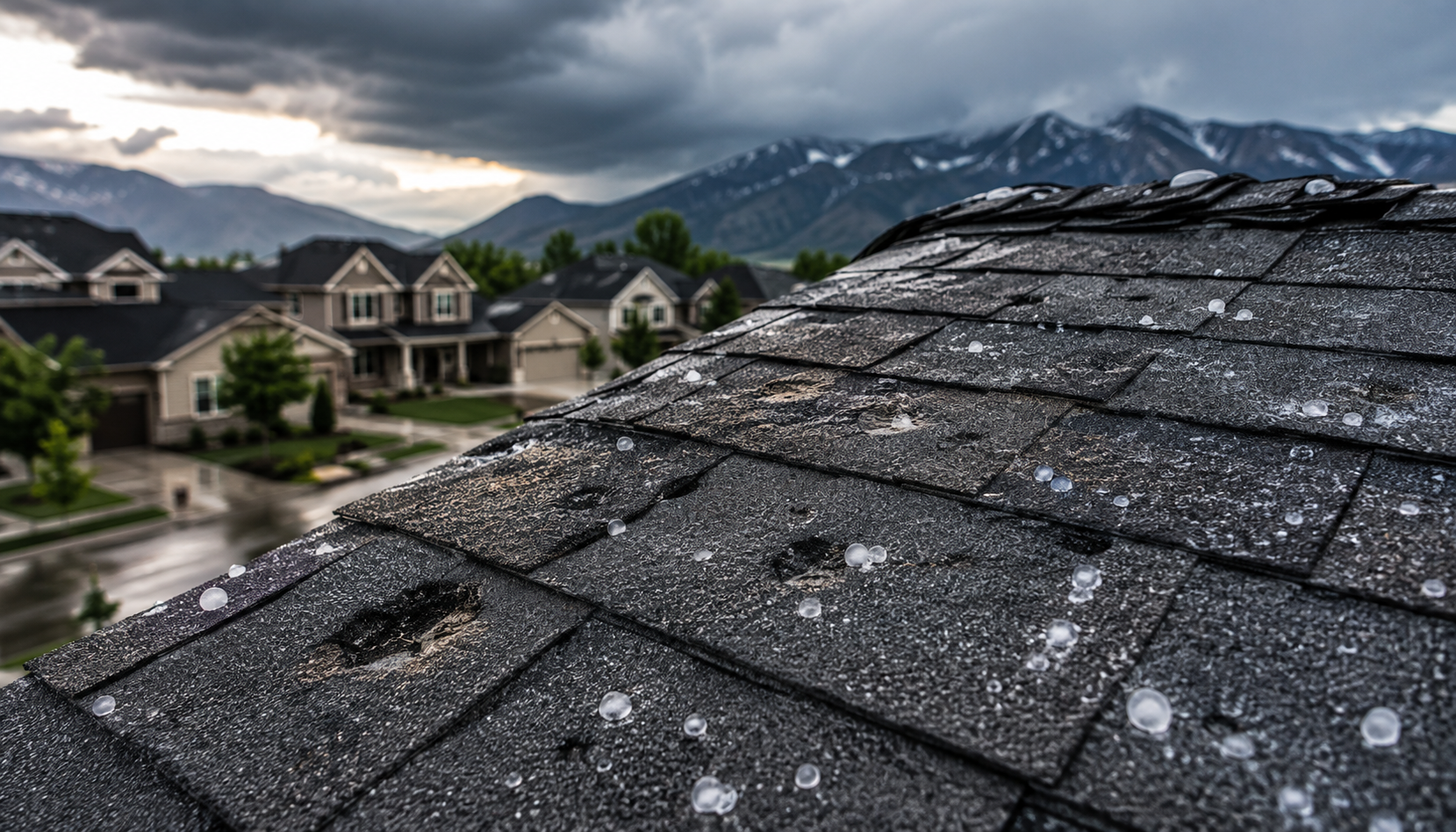
When hailstones strike asphalt shingles, the impact can compress and fracture the protective asphalt layer without immediately breaking through the surface. Roofing professionals refer to these damaged areas as bruises. A bruised shingle may continue protecting your home for weeks or months before the damaged area begins deteriorating.
As the shingle ages, the weakened section becomes increasingly vulnerable to:
- Cracking
- Granule loss
- Water penetration
- Wind damage
- Premature aging
By the time these symptoms become visible, the original hailstorm may be long forgotten.
Hidden Signs of Hail Damage Most Homeowners Miss
Not all storm damage can be seen from the ground. During a professional inspection, roofing contractors look for subtle warning signs that indicate your roof has suffered impact damage.
Granule Loss
The small mineral granules covering asphalt shingles protect them from harmful UV rays. Hail impacts can dislodge these granules, exposing the asphalt underneath. Over time, this accelerates deterioration and shortens the lifespan of the roof.
Bruised Shingles
Bruising occurs when hail compresses the asphalt beneath the surface. While difficult to identify without close inspection, bruised shingles often become weak points that eventually crack.
Hairline Cracks
Small fractures caused by hail impacts may not leak immediately, but repeated heating and cooling cycles allow these cracks to expand over time.
Damaged Ridge Caps
The ridge line often receives direct impacts during hailstorms. Cracked or loosened ridge cap shingles can allow moisture to enter the roof system.
Dented Roof Components
Metal roof vents, turbine vents, flashing, gutters, and downspouts frequently show dents after hailstorms. While cosmetic dents alone may not require repairs, they often indicate that shingles received similar impacts.
Wind Damage Isn’t Always Obvious Either
Strong winds can damage roofing systems even without tearing shingles completely off the roof.
During high-wind events, shingles may lift slightly before settling back into place. Although they appear normal afterward, the adhesive seal may have broken. Once that seal is compromised, future wind events become much more likely to remove the shingle entirely.
Professional inspectors look for:
- Lifted shingle edges
- Broken seal strips
- Loose ridge caps
- Missing fasteners
- Damaged flashing
- Exposed nail heads
These issues often remain invisible from the ground but can eventually allow water to penetrate beneath the roofing system.
Heavy Rain Can Reveal Existing Weaknesses
While rain itself rarely damages a properly installed roof, it quickly exposes existing vulnerabilities. Water naturally seeks the path of least resistance, meaning even a tiny opening can allow moisture to enter your attic or wall cavities.
Some of the most common leak locations include:
- Roof valleys
- Chimney flashing
- Plumbing vent boots
- Skylights
- Roof-to-wall transitions
- Nail penetrations
These areas deserve special attention during every professional roof inspection.
Why Storm Damage Doesn’t Always Cause Immediate Leaks
One of the biggest misconceptions homeowners have is that roof damage always results in an immediate leak. In reality, a roof can sustain significant storm damage while continuing to keep water out for weeks or even months.
For example, hail may weaken a shingle without puncturing it. Wind may break the adhesive seal that holds shingles in place without removing them. Flashing may bend just enough to allow water intrusion during the next major storm instead of the current one.
As Utah experiences additional heat, wind, snow, and rain throughout the year, these small weaknesses gradually become larger problems. Eventually, moisture finds its way beneath the roofing materials and into the underlying decking, insulation, or attic.
By the time water stains appear inside your home, the damage has often been developing for quite some time.
Signs Inside Your Home That May Indicate Roof Damage
Storm damage isn’t always visible from outside your home. In many cases, the first warning signs appear indoors. After severe weather, watch for these common indicators:
- Brown or yellow water stains on ceilings
- Water stains running down interior walls
- Peeling paint near ceilings
- Damp attic insulation
- A musty odor in the attic
- Visible mold or mildew growth
- Daylight shining through the roof decking
These symptoms often indicate that water has already entered the roofing system. Prompt repairs can help prevent structural damage and costly mold remediation.
Don’t Forget to Check Gutters and Downspouts
Your gutter system often provides important clues about the condition of your roof after a storm.
Following heavy hail or strong winds, inspect your gutters for:
- Large amounts of asphalt granules
- Dents caused by hail impacts
- Loose gutter fasteners
- Bent or damaged downspouts
- Overflow caused by debris
While damaged gutters may seem like a separate issue, they often indicate your roofing materials experienced the same weather conditions.
What Should You Do After a Hailstorm?
If your neighborhood experiences hail or severe winds, taking a few simple steps can help protect both your home and your insurance claim.
- Inspect your property from the ground. Look for obvious damage such as missing shingles, fallen tree limbs, dented gutters, or broken siding.
- Take photographs. Document any visible damage while conditions are fresh.
- Avoid climbing onto your roof. Walking on damaged shingles can be dangerous and may worsen existing damage.
- Schedule a professional inspection. An experienced roofing contractor can identify damage that homeowners typically cannot see.
- Address repairs promptly. Delaying repairs often allows additional damage to develop, increasing repair costs.
Will Homeowners Insurance Cover Hail Damage?
Many homeowner insurance policies cover sudden storm damage, including hail and high winds. However, coverage depends on your individual policy, deductible, and the condition of your roof before the storm.
Insurance companies typically look for evidence that the damage resulted from a covered weather event rather than normal aging or lack of maintenance.
A professional roof inspection provides valuable documentation that can help homeowners better understand the condition of their roof before filing a claim.
If your roof has recently experienced severe weather, it’s wise to schedule an inspection as soon as possible rather than waiting for visible leaks to develop.
Why Professional Roof Inspections Matter
Professional roofing contractors are trained to identify subtle storm damage that homeowners frequently overlook. During an inspection, they evaluate every major component of the roofing system, including:
- Shingles
- Roof decking (where accessible)
- Flashing
- Ridge caps
- Roof penetrations
- Ventilation components
- Gutters and drainage systems
- Signs of moisture intrusion
Many roofing issues can be repaired quickly when caught early. Waiting until leaks appear often results in significantly more extensive repairs.
Protect Your Roof Before Utah’s Winter Arrives
Late summer and early fall are among the best times to schedule a roof inspection in Utah. Completing repairs before freezing temperatures arrive helps ensure your roof is prepared for snow accumulation, ice, and winter storms.
Even minor repairs completed today may prevent thousands of dollars in damage during the coming winter season.
Why Storm Damage Doesn’t Always Cause Immediate Leaks
One of the biggest misconceptions homeowners have is that roof damage always results in an immediate leak. In reality, a roof can sustain significant storm damage while continuing to keep water out for weeks or even months.
For example, hail may weaken a shingle without puncturing it. Wind may break the adhesive seal that holds shingles in place without removing them. Flashing may bend just enough to allow water intrusion during the next major storm instead of the current one.
As Utah experiences additional heat, wind, snow, and rain throughout the year, these small weaknesses gradually become larger problems. Eventually, moisture finds its way beneath the roofing materials and into the underlying decking, insulation, or attic.
By the time water stains appear inside your home, the damage has often been developing for quite some time.
Signs Inside Your Home That May Indicate Roof Damage
Storm damage isn’t always visible from outside your home. In many cases, the first warning signs appear indoors. After severe weather, watch for these common indicators:
- Brown or yellow water stains on ceilings
- Water stains running down interior walls
- Peeling paint near ceilings
- Damp attic insulation
- A musty odor in the attic
- Visible mold or mildew growth
- Daylight shining through the roof decking
These symptoms often indicate that water has already entered the roofing system. Prompt repairs can help prevent structural damage and costly mold remediation.
Don’t Forget to Check Gutters and Downspouts
Your gutter system often provides important clues about the condition of your roof after a storm.
Following heavy hail or strong winds, inspect your gutters for:
- Large amounts of asphalt granules
- Dents caused by hail impacts
- Loose gutter fasteners
- Bent or damaged downspouts
- Overflow caused by debris
While damaged gutters may seem like a separate issue, they often indicate your roofing materials experienced the same weather conditions.
What Should You Do After a Hailstorm?
If your neighborhood experiences hail or severe winds, taking a few simple steps can help protect both your home and your insurance claim.
- Inspect your property from the ground. Look for obvious damage such as missing shingles, fallen tree limbs, dented gutters, or broken siding.
- Take photographs. Document any visible damage while conditions are fresh.
- Avoid climbing onto your roof. Walking on damaged shingles can be dangerous and may worsen existing damage.
- Schedule a professional inspection. An experienced roofing contractor can identify damage that homeowners typically cannot see.
- Address repairs promptly. Delaying repairs often allows additional damage to develop, increasing repair costs.
Will Homeowners Insurance Cover Hail Damage?
Many homeowner insurance policies cover sudden storm damage, including hail and high winds. However, coverage depends on your individual policy, deductible, and the condition of your roof before the storm.
Insurance companies typically look for evidence that the damage resulted from a covered weather event rather than normal aging or lack of maintenance.
A professional roof inspection provides valuable documentation that can help homeowners better understand the condition of their roof before filing a claim.
If your roof has recently experienced severe weather, it’s wise to schedule an inspection as soon as possible rather than waiting for visible leaks to develop.
Why Professional Roof Inspections Matter
Professional roofing contractors are trained to identify subtle storm damage that homeowners frequently overlook. During an inspection, they evaluate every major component of the roofing system, including:
- Shingles
- Roof decking (where accessible)
- Flashing
- Ridge caps
- Roof penetrations
- Ventilation components
- Gutters and drainage systems
- Signs of moisture intrusion
Many roofing issues can be repaired quickly when caught early. Waiting until leaks appear often results in significantly more extensive repairs.
Protect Your Roof Before Utah’s Winter Arrives
Late summer and early fall are among the best times to schedule a roof inspection in Utah. Completing repairs before freezing temperatures arrive helps ensure your roof is prepared for snow accumulation, ice, and winter storms.
Even minor repairs completed today may prevent thousands of dollars in damage during the coming winter season.
Related Roofing Resources
Want to learn more about protecting your home and maintaining your roof? Explore these additional resources from Liberty Roofing Utah:
- Residential Roofing Services – Learn about our complete residential roofing solutions, from inspections and repairs to full roof replacements.
- Roof Repair Services – Discover how timely roof repairs can prevent leaks and extend the life of your roofing system.
- Roof Replacement – Find out when repairing your roof is no longer enough and replacement becomes the better long-term investment.
- Contact Liberty Roofing Utah – Schedule a professional roof inspection or request a free estimate from our experienced team.
Protect Your Home with a Professional Roof Inspection
Even if your roof looks undamaged after a hailstorm or severe summer weather, hidden problems can develop into costly leaks if left unaddressed. Our experienced roofing professionals provide thorough inspections, honest recommendations, and quality workmanship to help protect your home and your investment.
Whether you need a roof repair, storm damage assessment, or simply want peace of mind before Utah’s winter weather arrives, Liberty Roofing Utah is here to help.